

Table of Contents
- Key Takeaways
- The Keyword Research Mindset
- Foundational Keyword Discovery
- Mastering Keyword Research with Ahrefs
- Beyond Individual Keywords
- Strategic Keyword Prioritization
- Conclusion
- Frequently Asked Questions
- What is the first step in keyword research with Ahrefs?
- How can I find low-competition keywords in Ahrefs?
- Why is search intent important in keyword research?
- Can Ahrefs help with keyword prioritization?
- How do I analyze competitors’ keywords in Ahrefs?
- Should I focus only on high-volume keywords?
- How does human insight improve keyword research?
Key Takeaways
-
Approach keyword research as an essential component of your SEO strategy, constantly remaining receptive to emerging trends and shifts in user intent to maintain content freshness.
-
Begin with seed keywords. Then explore keyword tools and your competition to find related terms, audience questions, and hidden opportunities.
-
Use Ahrefs to discover, scrutinize, and filter keywords while considering intent, metrics, and SERP competition before you make your final selection.
-
Group keywords into topic clusters and content hubs to cover broad topics, enhance user experience, and boost your site’s authority.
-
Rank the keywords by which ones are most valuable for your business, best align with user intent, and provide a competitive advantage in your niche.
-
Mix data-driven know-how with a human touch. Collect audience feedback and adjust your strategy for real-world impact.
To do keyword research with Ahrefs, start by using its Keywords Explorer tool and enter your main topic or phrase. Ahrefs displays search volume, keyword suggestions, traffic potential, and ranking difficulty in one comprehensive dashboard.
That’s why countless businesses, agencies, and SEO professionals—including those offering white label seo services—rely on Ahrefs for their keyword research needs. In this comprehensive guide, learn how to use proven strategies and practical tips to make keyword research work effectively for your business.
The Keyword Research Mindset
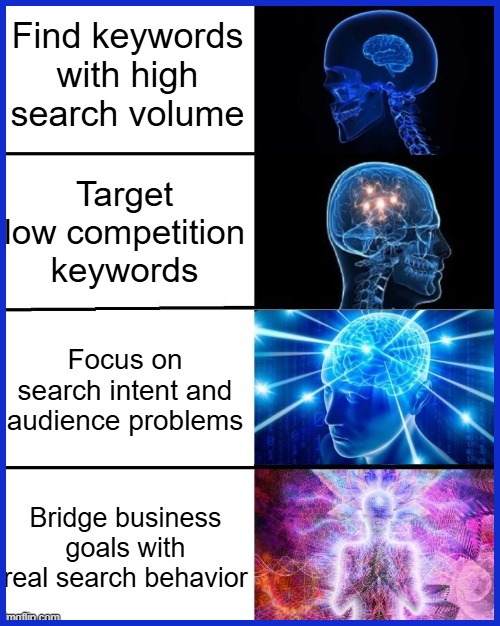
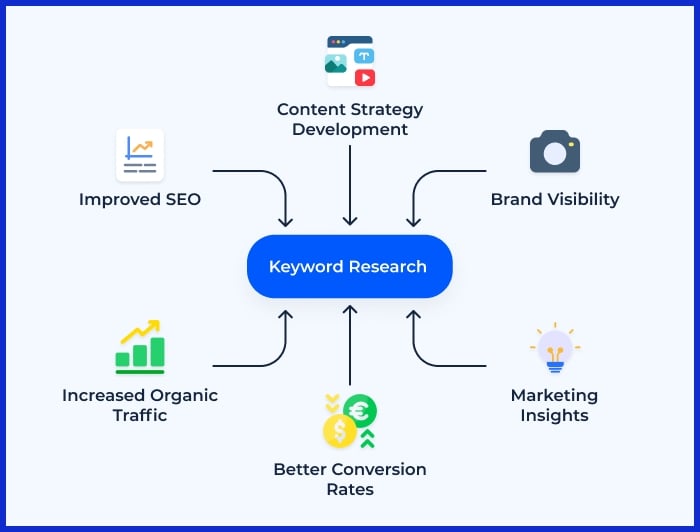
Keyword research forms the foundation of any successful SEO strategy. It’s not simply about identifying popular search terms—it’s about understanding your business objectives, your target audience’s needs, and how to align both with actual search behavior patterns. Utilizing a keyword research tool can enhance this understanding.
Think of keyword research as an ongoing process, not a one-time task. Search trends evolve, new topics emerge, and user behavior shifts constantly. Industries develop new terminology, seasonal patterns change, and competitive landscapes transform regularly, making keyword suggestions crucial for staying relevant.
This is why effective keyword research should be a systematic habit rather than a sporadic activity. Many assume high search volume automatically equals better opportunities, but this approach often leads to wasted resources. For emerging businesses or smaller websites, targeting highly competitive broad terms typically yields poor results, whereas focusing on relevant keyword ideas can yield better outcomes.
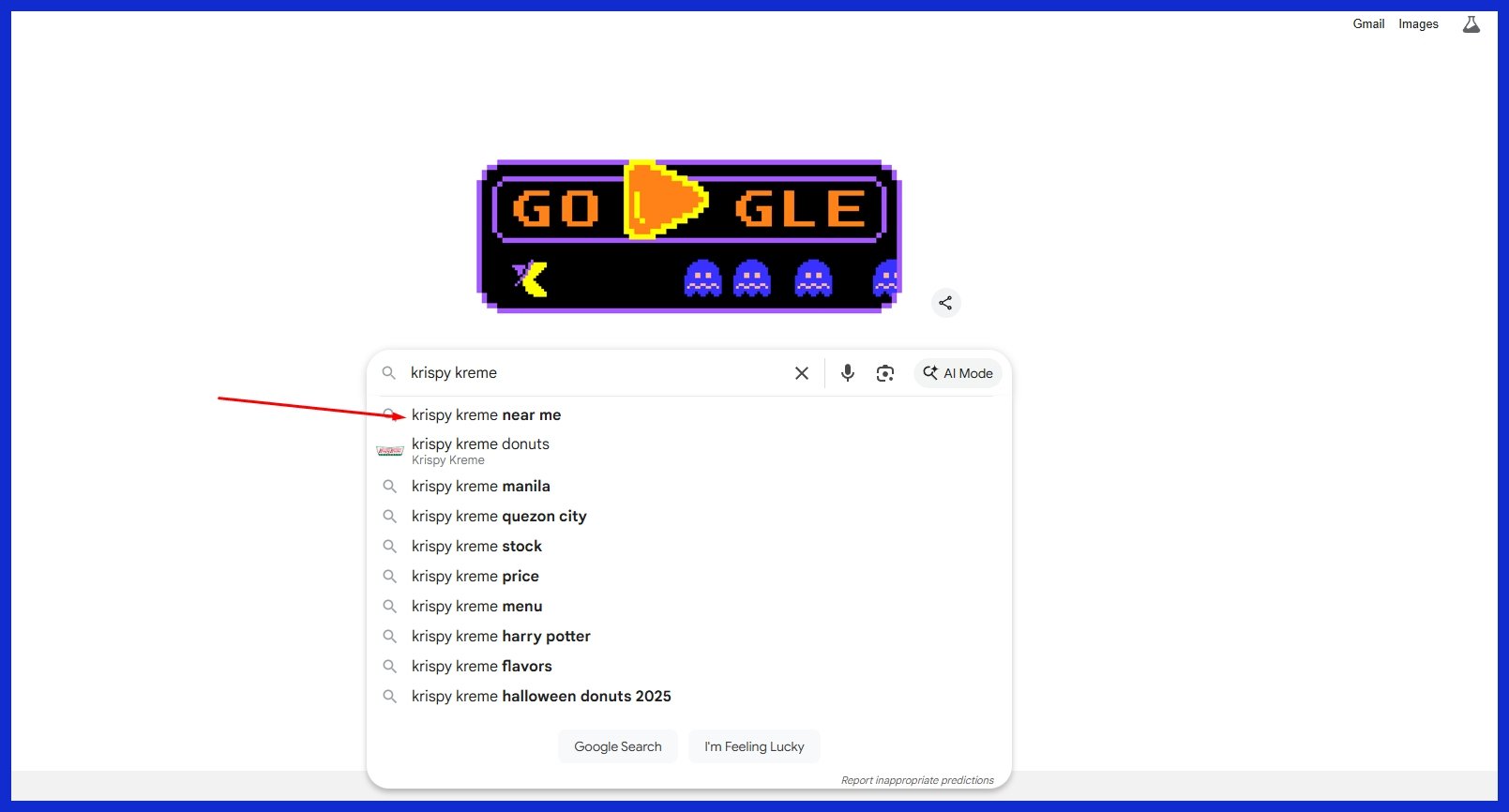
Instead, concentrate on discovering keywords that align with your unique value proposition and match what your potential customers actually seek. Often, more specific, longer phrases attract visitors who are closer to making decisions or taking action, which can significantly enhance your search traffic.
Developing this strategic mindset requires patience and continuous learning. Even experienced marketers must adapt their approach based on each research cycle’s findings. Start by developing deep familiarity with your industry landscape and understanding the genuine problems your target audience faces, using tools like Google Search Console for insights.
Your role as an SEO practitioner is to bridge the gap between these real problems and viable solutions, using keyword data to identify the most effective pathways forward. This can involve creating a keyword list that reflects your audience’s needs and search intents. As strategies become more data-driven, ai seo can enhance this process by uncovering hidden keyword patterns, predicting emerging trends, and helping refine content decisions based on real-time search behavior.
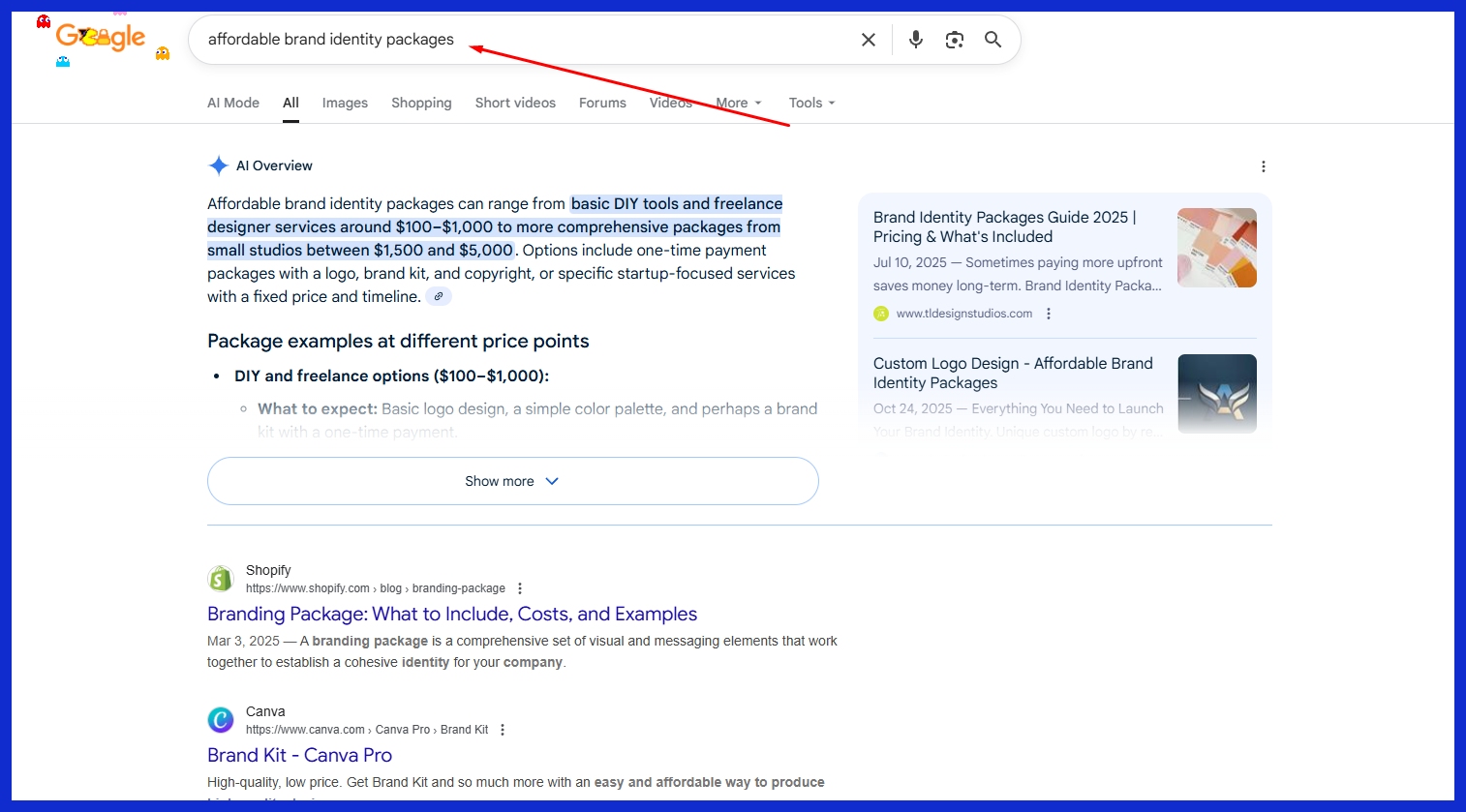
For example, a design agency might research keywords connected to specific design challenges, such as “fast turnaround logo design” or “affordable brand identity packages.” These represent actual business pain points, and the right keyword strategy can position solutions directly in front of people experiencing these challenges.
Tools like Ahrefs handle the technical heavy lifting by providing monthly search volumes, competition metrics, and trend data. However, remember that popularity doesn’t guarantee traffic. Even ranking first for a keyword doesn’t automatically translate to website visits—search features, user intent, and result presentation all influence click-through rates.
Step-by-Step Keyword Research Process with Ahrefs
-
Set your primary goals and target audience. Understand what you want to achieve (e.g., drive traffic, target conversions, build authority) and whom you want to reach.
-
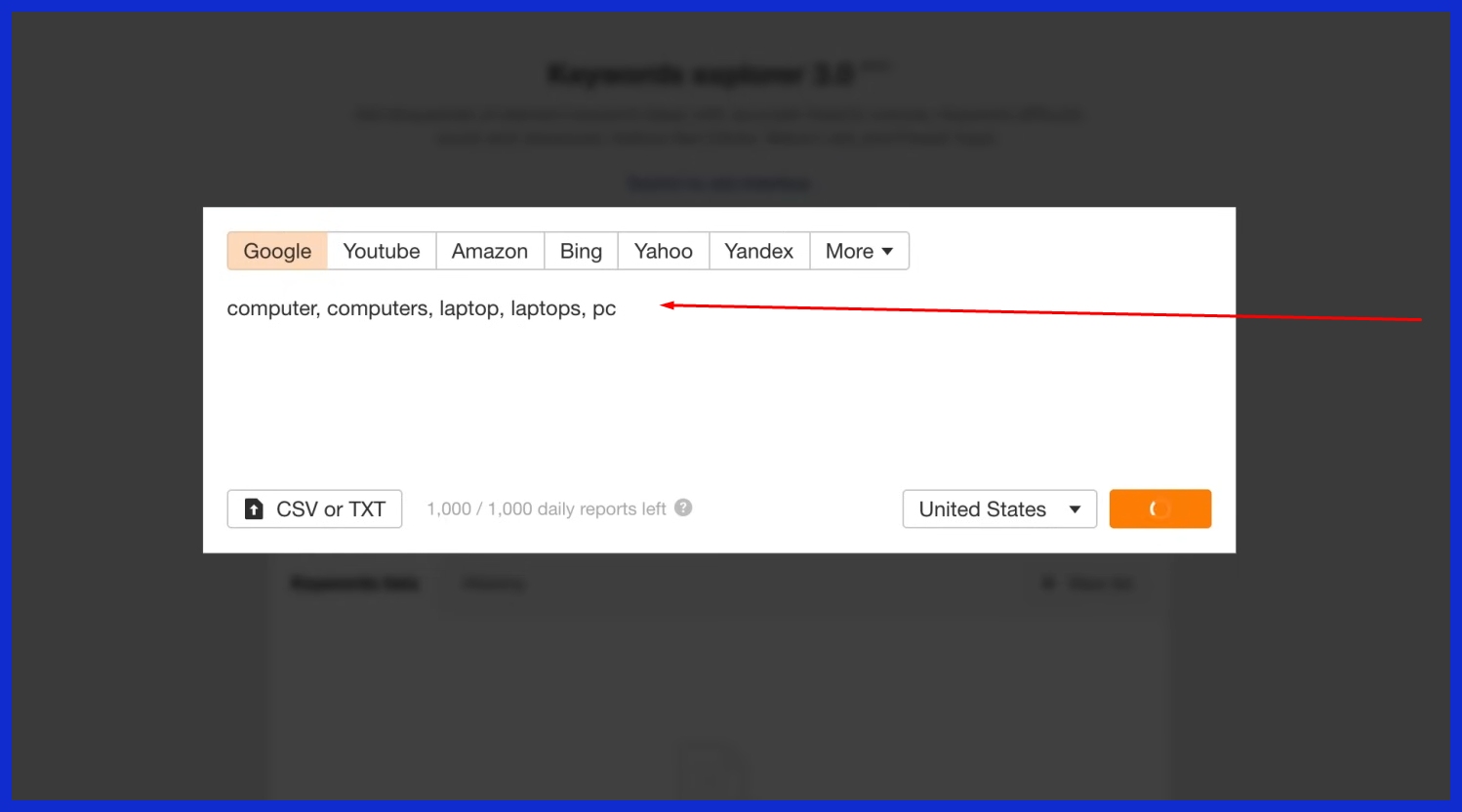
Compile seed keywords based on your business and customer language. List the core topics, products, or services central to your business. Brainstorm the initial keywords your ideal customers are likely to use.
-
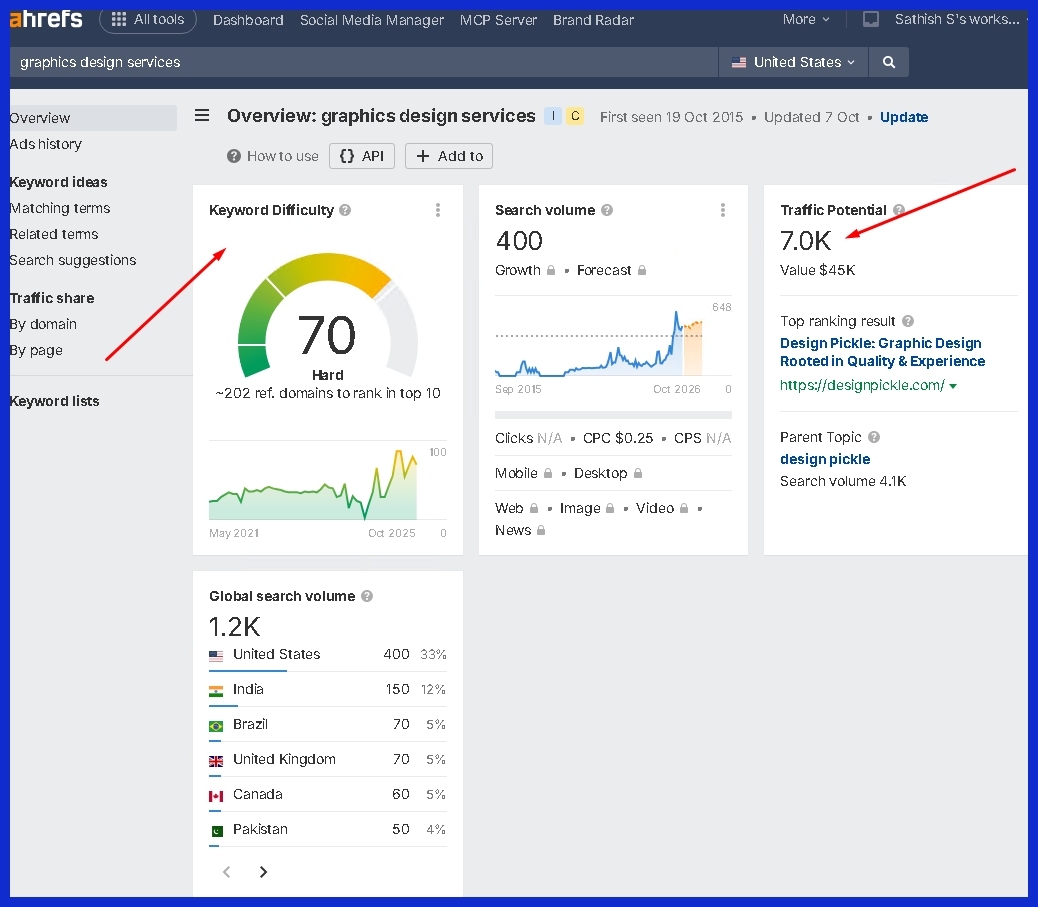
Enter your seed keywords in Ahrefs Keywords Explorer. Analyze the keyword overview for each term—see search volume, Keyword Difficulty (KD), traffic potential, CPC, and click data.
-
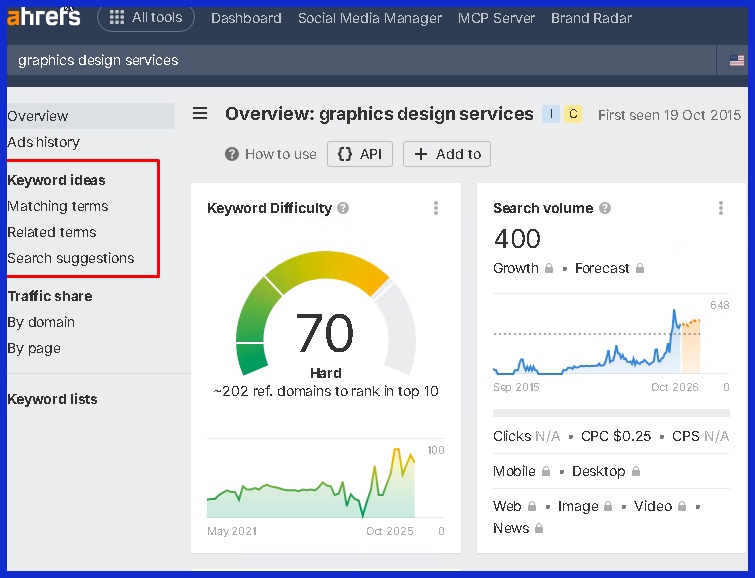
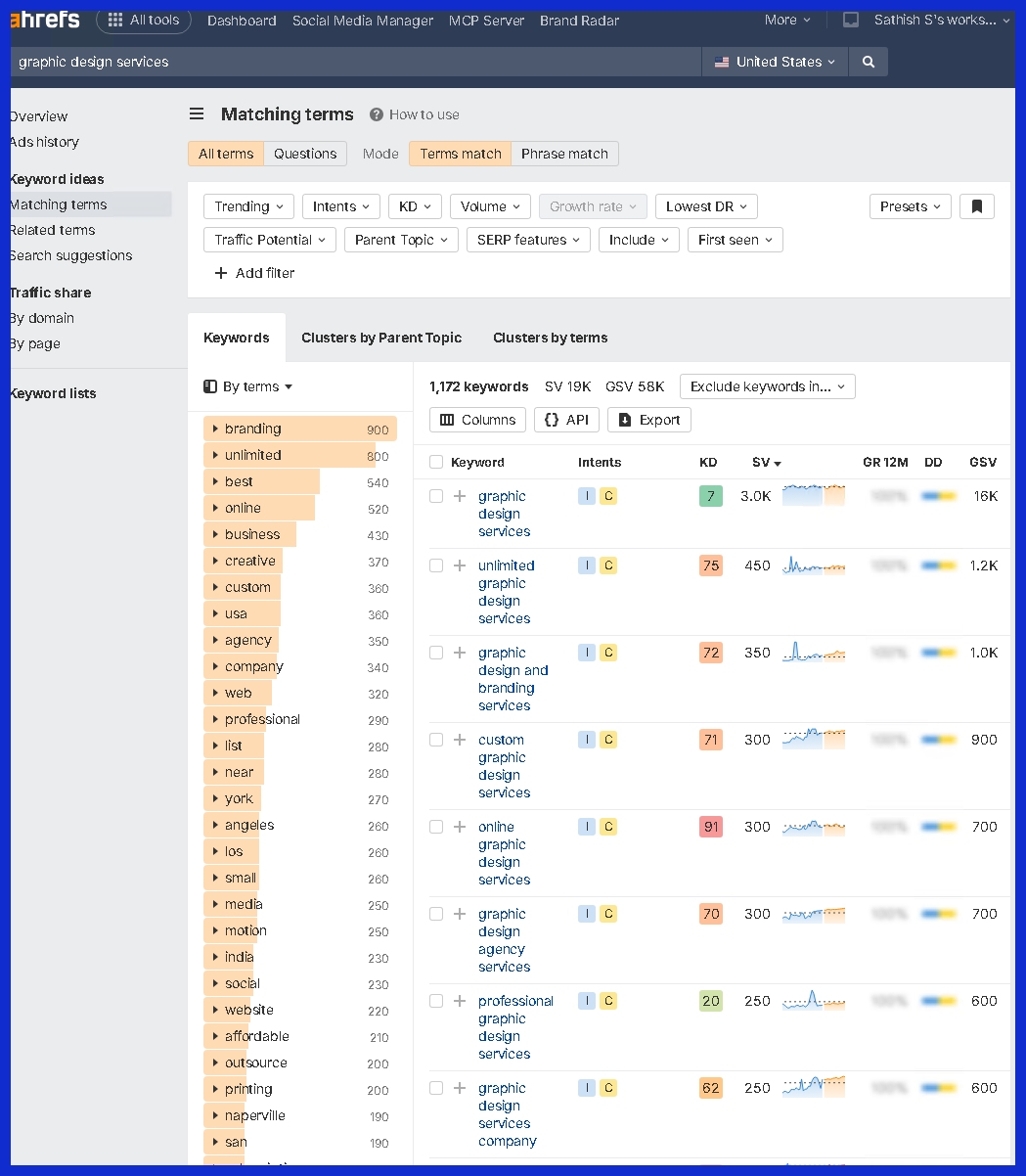
Browse keyword suggestions, matching, and related terms. Use Ahrefs’ various reports—Matching Terms, Related Terms, Also rank for, and Search Suggestions—to expand your list and discover new opportunities.
-
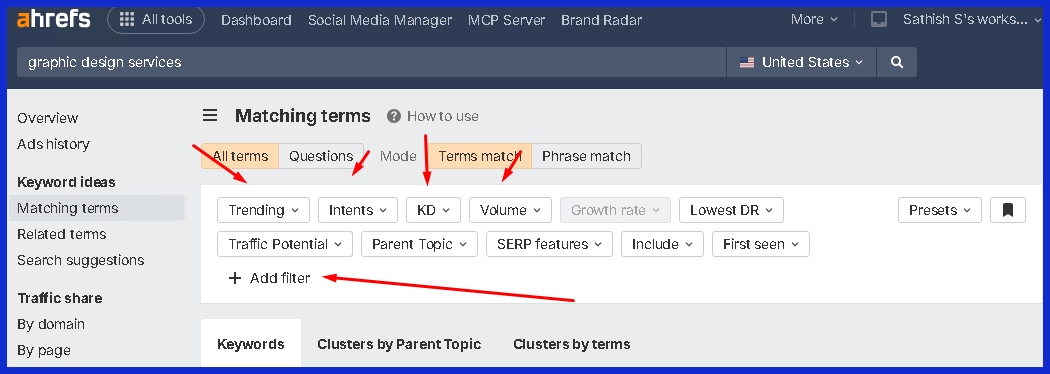
Apply filters for low-competition and high-opportunity keywords. Set maximum KD, minimum search volume, or include/exclude specific words. Focus on keywords within reach, given your site’s authority and goals.
-
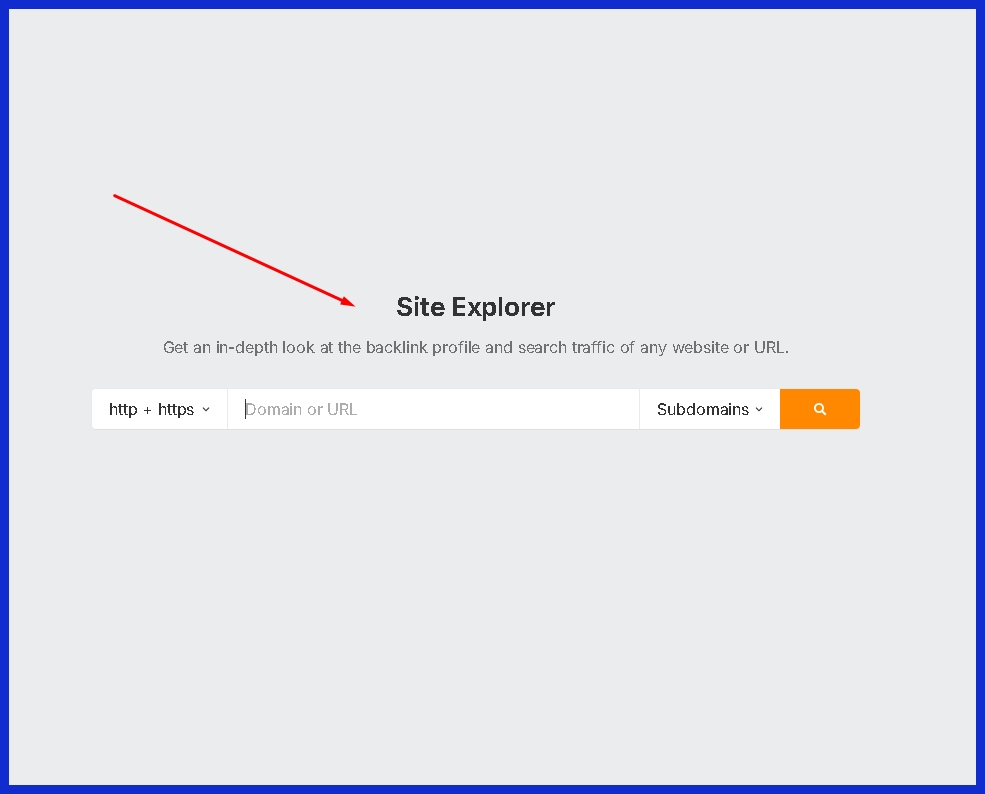
Research competitor keywords with Site Explorer. Type competitors’ domains into Ahrefs, review their top pages, and export their organic keyword data. Use the Content Gap tool to find what they rank for, but you do not.
-
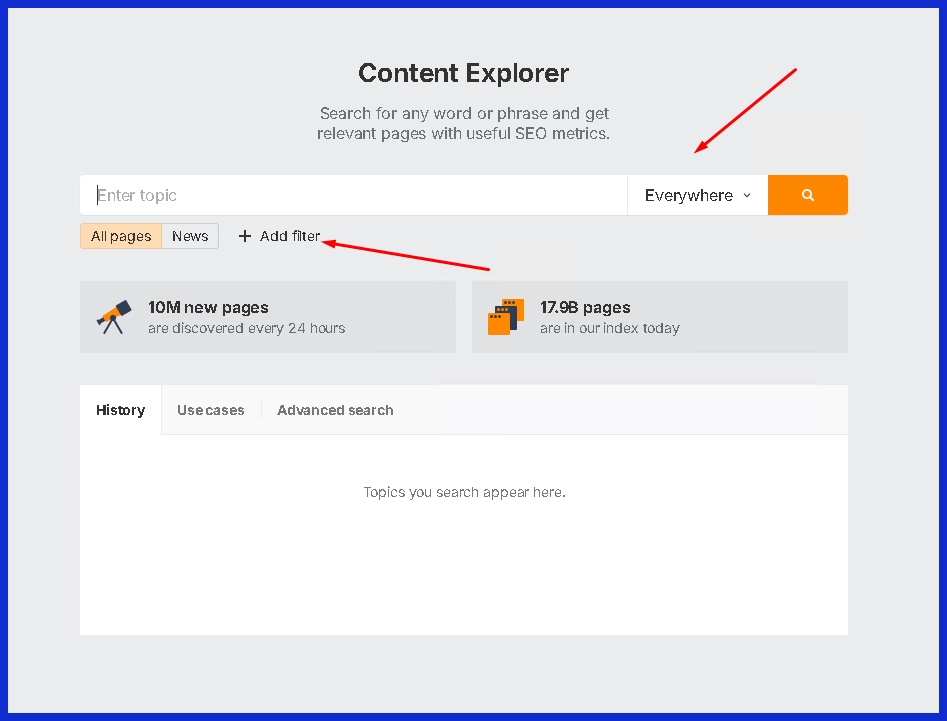
Group and cluster keywords by topic and intent. Organize your list into logical topics (clusters) and label them by search intent: informational, commercial, transactional, or navigational. Assign keywords to planned content pieces or update existing content accordingly.
-
Analyze SERPs for selected keywords. Manually review the first page for your target keywords inside Ahrefs to understand what’s currently ranking—look at content type (blog, product, local search, etc.), competition quality, and SERP features like featured snippets.
-
Prioritize and build your content plan. Choose the keywords that best fit your business value, audience intent, and competition levels. Map keywords to pillar pages and supporting posts.
-
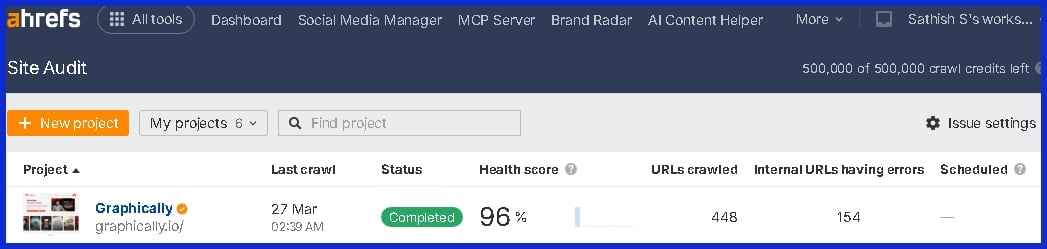
Monitor performance and revisit your keyword research regularly. Use Ahrefs Site Audit, Rank Tracker, and Analytics to evaluate keyword performance, make adjustments, and stay ahead of evolving trends and search behaviors.
Foundational Keyword Discovery
Keyword research with Ahrefs begins by creating a sturdy foundation by finding the perfect keywords for your niche. These initial terms, or “seed keywords,” unlock the door to more targeted investigation. These subsequent actions assist you in identifying what functions, identifying what the competition overlooks, and responding to what your audience requires.
This foundation is crucial for SMBs and agencies looking for genuine growth. By understanding what people are searching for and why, you can construct content that attracts the right audience and advances your business.
Seed Keywords
-
List pillar keywords in your niche. For a design service such as Graphically.io, begin with “graphic design,” “unlimited design,” “design agency,” and “design service.” Imagine what your perfect customer enters into the search box.
-
Add variations and related terms. For example, if your primary word is “graphic design,” experiment with “logo design,” “banner design,” “web design,” and even “digital art.” Check matching terms and related terms in Ahrefs’ Keyword Explorer. Matching terms are close to your root words and related terms could be “creative agency” or “brand visuals.”
-
Use Ahrefs to find long-tail keywords. For example, longer phrases such as “cheap unlimited graphics design service” or “top graphic design agency for small business” have lower competition and can drive more focused traffic.
-
Sort your list by relevance and search volume. If a word is searched frequently but doesn’t match your service, bypass it. Think about words that have good traffic and obvious business value. Employ keyword clustering to organize concepts. Then, select the most potent in each cluster.
Competitor Analysis
Observe what the heavyweights in your niche are doing. If you identify a gap, such as the search term “unlimited revisions graphic design” not being targeted by competitors, seize the opportunity. This provides you with a distinct advantage, especially if your service, like Graphically.io, covers areas others overlook.
Audience Questions
When you know what your audience wonders through effective keyword research tools, you can provide them better answers, enhancing trust and reach.
Mastering Keyword Research with Ahrefs
Ahrefs provides entrepreneurs, agencies, and consultants with a keyword research tool that offers intuitive, visual dashboards and actionable metrics. By analyzing keyword suggestions and search queries, you can align your content strategy with what your audience truly desires. This is crucial whether you’re part of a global team or operate a boutique agency.
1. Advanced Keyword Exploration
Enter your seed keyword into Ahrefs Keyword Explorer to access extensive keyword suggestions. Navigate to the “All keyword ideas” section to discover a comprehensive mix of phrases, including both broad topics and specific long-tail variations relevant to your niche. By focusing on search traffic metrics, you can identify which keywords will drive the most visitors to your site.
Long-tail keywords offer significant advantages for businesses in competitive markets or those just beginning their SEO journey. Instead of targeting broad terms like “graphic design,” focus on specific phrases like “graphic design for e-commerce businesses” to attract users seeking exactly what you provide.

Utilize the “Include” and “Exclude” filters to refine your keyword lists efficiently. If you want keywords containing “logo” or “branding,” set appropriate filters to streamline your research process. Review suggestions systematically, sort by relevant metrics, and bookmark keywords that align with your business objectives.
Pay attention to the different keyword idea reports within Ahrefs to uncover valuable insights that can enhance your digital marketing strategy.
-
Matching terms: Contain your seed keyword in various orders and combinations
-
Related terms: Keywords that frequently appear on pages ranking for your seed keyword
-
Also rank for: Keywords that pages ranking for your seed keyword also rank for
-
Search suggestions: Autocomplete suggestions from various search engines
-
Newly discovered: Recently identified keywords in Ahrefs’ database
2. Analyze Metrics
Every keyword in Ahrefs includes search volume, keyword difficulty, and traffic potential. Keyword difficulty is a score from 0 to 100 that indicates how many sites you will need linking to your page to rank in the top 10. A high score means tough competition, often requiring the specialized expertise of a saas link building agency like VHinfo to secure the high-authority placements that generic outreach simply can’t reach.
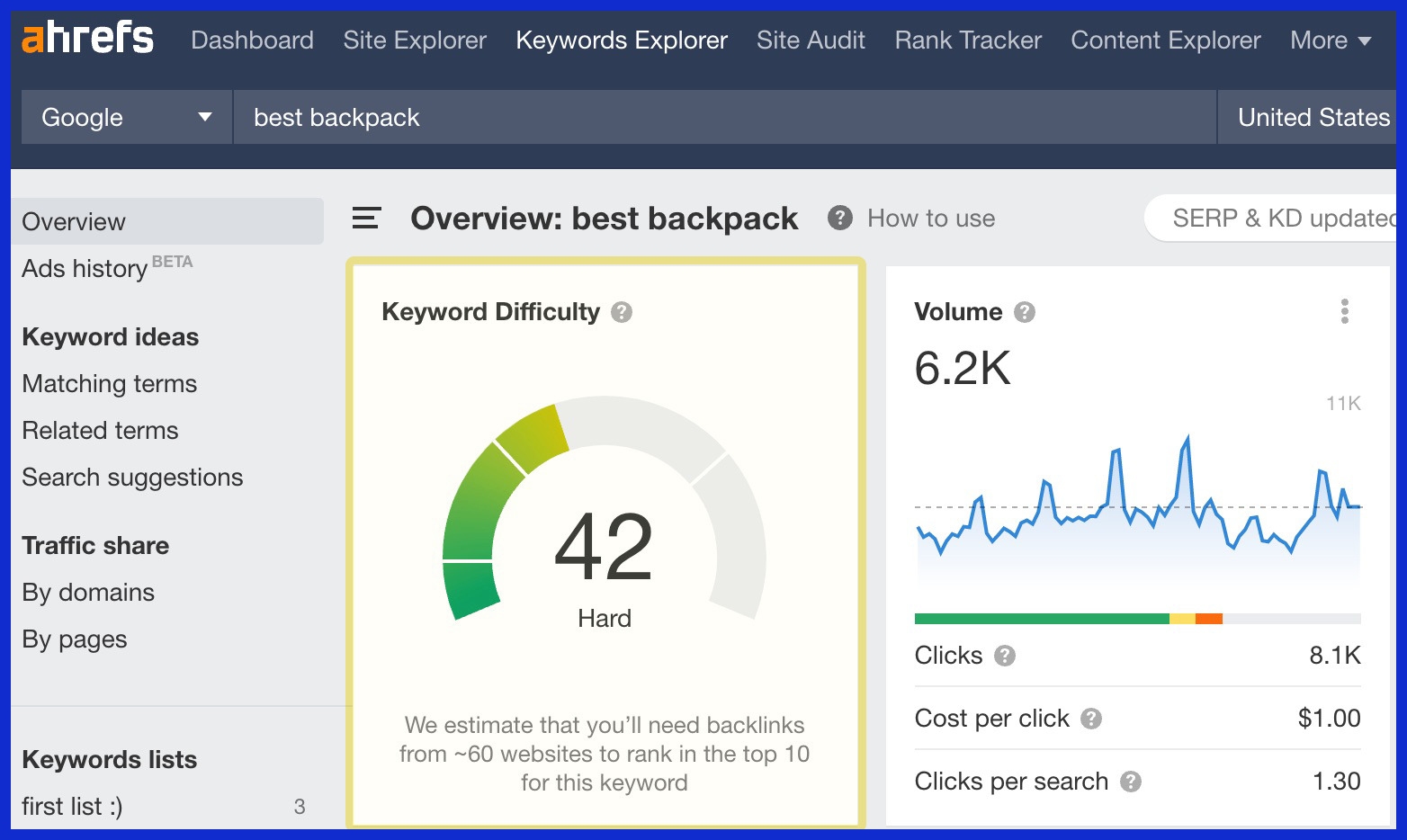
Small agencies may wish to begin with scores less than 30. Consider search volume, but do not chase high numbers alone. Other times, a keyword with 200 searches and low competition brings in consistent leads.
Clicks indicate how many actually visit a result, not simply search it. Match these figures to your business objectives. For instance, if you want additional project requests for your design agency, pursue keywords that receive actual clicks, not mere impressions.
3. Uncover Intent
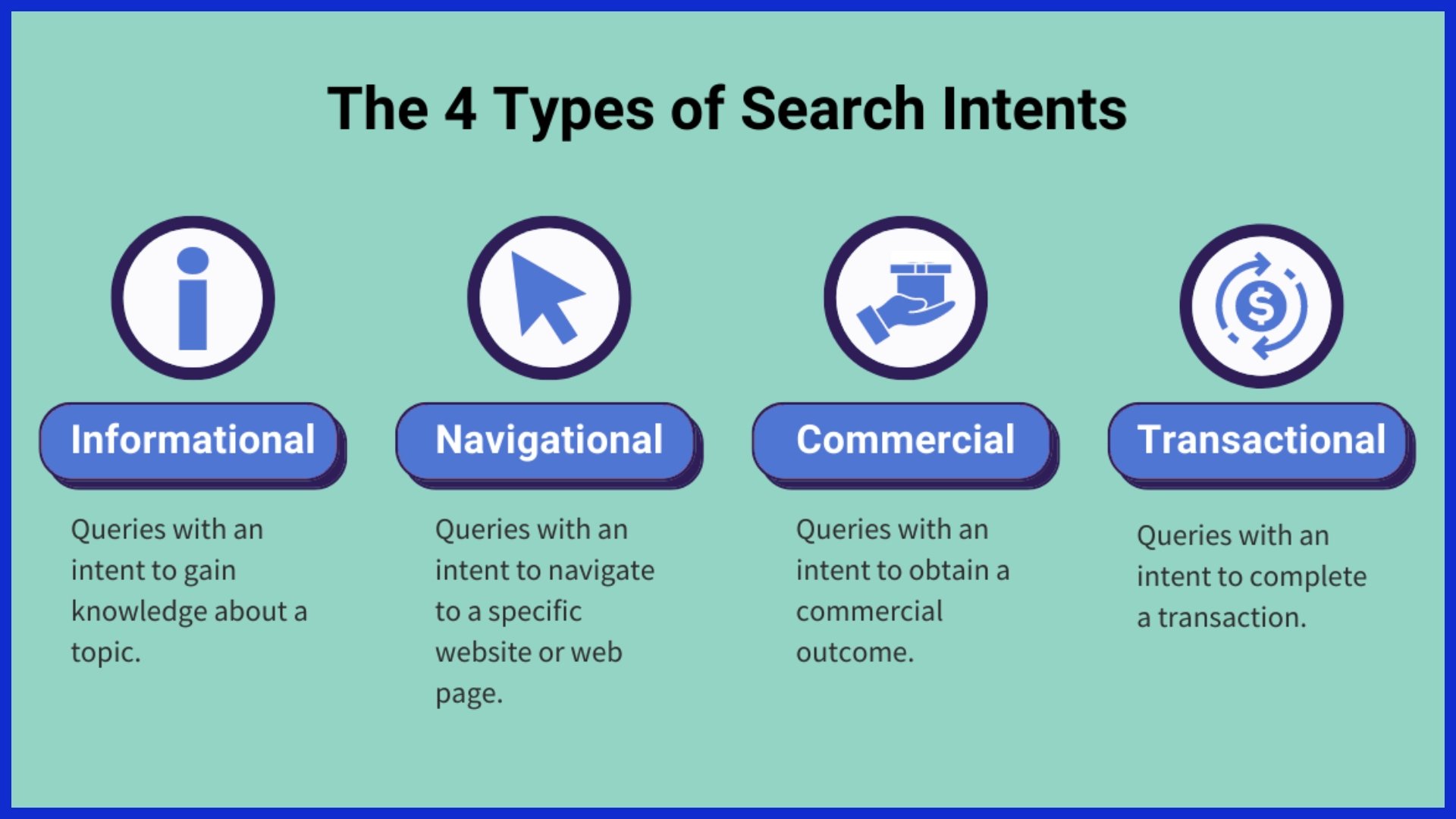
Categorize each keyword by its primary search intent: informational, navigational, commercial investigation, or transactional. Understanding these four distinct intent types enables more strategic keyword targeting.
-
Informational: Users seeking knowledge (for example: “what is unlimited graphic design”)
-
Navigational: Users looking for specific websites or brands ( for example: “Ahrefs login”)
-
Commercial investigation: Users researching before purchasing (for example: “best graphic design services 2025”)
-
Transactional: Users ready to take action (“hire graphic design agency”)
Ahrefs helps identify intent patterns at scale through SERP analysis and result types. Target high-intent keywords that align with your business goals—if you want new clients, transactional and commercial investigation keywords typically provide better conversion potential than purely informational terms. For a SaaS marketing agency, prioritizing commercial investigation and transactional keywords often leads to stronger ROI than focusing solely on informational traffic.
4. Identify Gaps
Go through your list and find the keywords you’re missing. Compare with competitors to identify what they rank for and you don’t. Ahrefs makes this easy with ‘Content Gap’ analysis.
If you observe ’monthly graphic design subscription’ being effective for others but not for you, include it in your strategy. Check your results frequently. Keyword trends shift every month or quarter, and remaining adaptable is crucial.
5. Evaluate SERPs
Search your shortlisted keywords in Ahrefs to check out what’s ranking for them. Observe what type of pages are ranking, such as blog posts, landing pages, or service pages. This molds your personal plan.
Check out how fierce the competition is and what you’ve got to surpass. If the front-page hits are Graphically.io or other well-tuned sites, establish your bar. Good beats keyword!
Beyond Individual Keywords
Keyword research goes way beyond selecting a few individual keywords. For small business owners, agencies and tech consultants, it’s more than just ranking for “graphic design.” It’s about owning related searches and trust. Rather than pursue one-off keywords, cultivating a spiderweb of related concepts around themes can reach a larger, more involved audience.
It helps you steer clear of those low-volume keywords that go nowhere and those high-volume ones that are difficult to rank for. With Ahrefs, you can construct a strategy that strikes the sweet spot—not too difficult, not too obscure.
Topic Clusters
Topic clusters bring order and strategy to keyword targeting by organizing related terms around central themes. Start by identifying 5-10 primary topic categories that represent your core business areas, such as “logo design,” “brand strategy,” or “web graphics.”
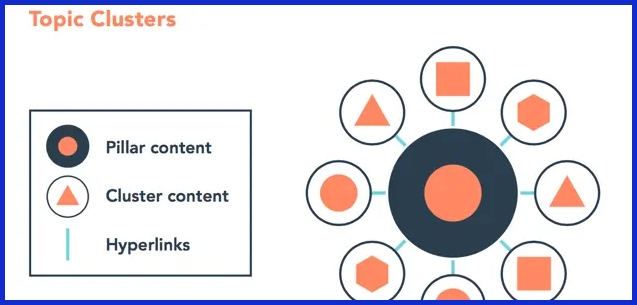
Use Ahrefs to identify supporting long-tail keywords and related terms for each primary topic. These supporting keywords should address different aspects of the main theme, various user intents, and different stages of the customer journey.
Create comprehensive pillar pages that serve as authoritative resources for each main topic cluster. These cornerstone pieces should thoroughly cover the primary subject while linking to more specific subtopic pages that target individual supporting keywords.
For example, a pillar page about “Logo Design” might link to subtopic pages targeting:
-
“Logo design process for startups”
-
“Logo file formats explained”
-
“Logo design pricing strategies”
-
“Logo redesign best practices”
Each subtopic page targets specific keywords while contributing to the overall topical authority of your website. This interconnected structure helps search engines understand your expertise while providing users with comprehensive information resources.
Content Hubs
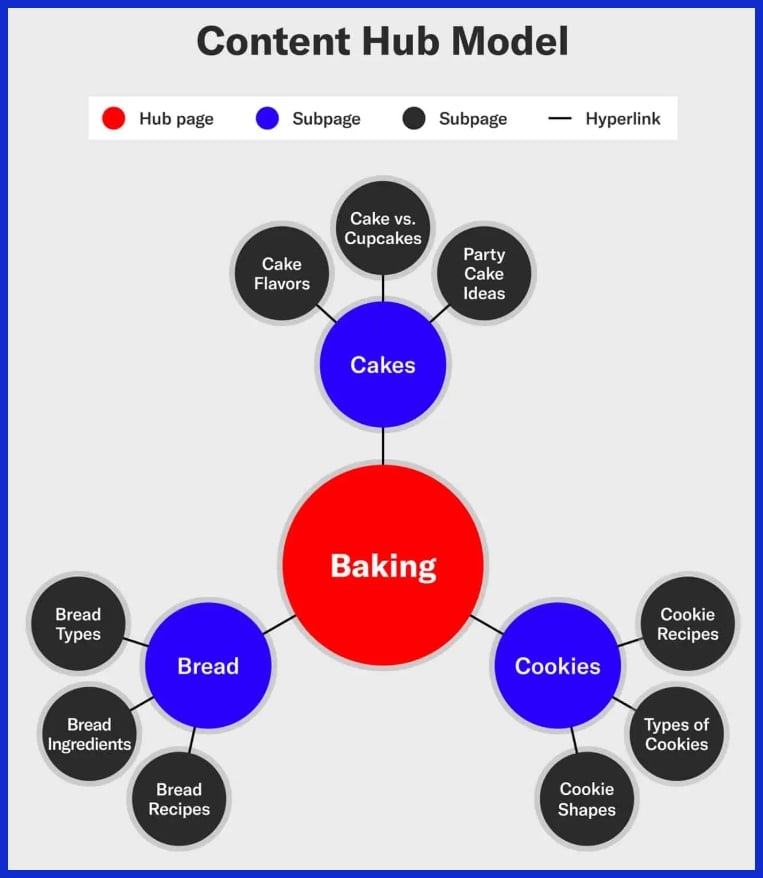
Content hubs represent the next evolution of topic clusters, aggregating multiple related topic clusters into comprehensive resource centers. A well-designed hub transcends individual keyword targeting to address everything users might want to know about broader subject areas.
For instance, a design agency might create a comprehensive “Brand Identity Hub” that incorporates:
-
Logo design cluster (process, pricing, examples)
-
Color theory cluster (psychology, trends, application)
-
Typography cluster (selection, pairing, implementation)
-
Brand guidelines cluster (creation, implementation, maintenance)
Use Ahrefs to track which sections of your content hubs perform best, then cross-link from lower-performing pages to successful ones or expand high-performing topics with additional supporting content.
Regularly update hub content to maintain freshness and relevance. Search engines favor websites that consistently provide current, valuable information, making content maintenance essential for long-term success.
Strategic Keyword Prioritization
Intelligent keyword prioritization forms the core of any successful SEO strategy. Choosing the right keywords isn’t just about search volume or trends; it’s about finding the ideal alignment between your business objectives, user needs, and your competitive advantage. Not all keywords are created equal when it comes to making you visible and gaining traction, so it pays to strategically plot their worth using Ahrefs and a little common sense.
|
Keyword |
Difficulty |
Traffic Potential |
Relevance |
Competitive Edge |
Score (1-10) |
|---|---|---|---|---|---|
|
logo design |
High |
10,000 |
High |
Medium |
7 |
|
unlimited design services |
Medium |
3,000 |
Very High |
High |
9 |
|
graphic design for startups |
Low |
900 |
High |
High |
8 |
|
cheap branding assistance |
Low |
600 |
Medium |
Medium |
6 |
Each keyword needs to be evaluated for its ability to generate sales. A smart choice gets your products or services in front of the right folks, such as “unlimited design services” aligning perfectly with small businesses or agencies looking for value-priced design assistance, our specialty at Graphically.io!
Conclusion
Good keyword work with Ahrefs does more than just populate a list. It assists you in selecting terms aligned with your objectives and aligns with what actual people desire. From initial search to final list, every step provides you with fresh directions for expansion. Whether you’re a small business in Berlin, a marketing shop in Toronto, or a solo tech pro in Sydney, these tools are all at your disposal. Tweak your selections, observe trends, and allow your instinct to vet the numbers. Growth comes from small, sharp moves. Want a hand building your online brand? Graphically.io puts your copy and your design working hand in hand. Give us a whirl and discover how simple new concepts and clean layouts can gain you new admirers.
Frequently Asked Questions
What is the first step in keyword research with Ahrefs?
Begin with Ahrefs’ Keywords Explorer to analyze keyword metrics. Enter your seed keywords to uncover valuable keyword suggestions based on actual search traffic.
How can I find low-competition keywords in Ahrefs?
Filter by keyword difficulty score in Ahrefs Keyword Explorer. Set this to a low value to discover valuable content opportunities that are easiest to rank for, considering their search volume and competition for relevant keyword ideas.
Why is search intent important in keyword research?
By understanding search intent and utilizing keyword research tools, you’ll ensure you’re targeting relevant keyword ideas that align with what users are really seeking, significantly improving your chances of ranking.
Can Ahrefs help with keyword prioritization?
Yes, Ahrefs offers essential information such as search volume, keyword difficulty score, and traffic potential data. Utilize these metrics to prioritize relevant keyword ideas that provide the optimal balance between search traffic and ranking potential.
How do I analyze competitors’ keywords in Ahrefs?
Input your competitor’s domain in Ahrefs’ Site Explorer to analyze their leading keywords and discover relevant keyword ideas for your strategy.
Should I focus only on high-volume keywords?
High-volume words are competitive. Stir in some long-tail and low competition keywords to gain targeted traffic and establish authority much faster.
How does human insight improve keyword research?
Human insight illuminates data, contextualizes trends, and identifies opportunities that keyword research tools overlook. Mixing Ahrefs data with experience results in smarter keyword selection and valuable content.