Table of Contents
- Key Takeaways
- Why an AI-Generated Menu Destroys Customer Trust
- The Uncanny Valley of Food
- Real-World Backlash Is Growing
- What Customers See When They See Fake Food
- AI Images Versus Human Design
- Authenticity Is the New Currency
- Your Menu Is a Marketing Asset
- How to Build a Menu Customers Trust
- The Better Solution: Human Designers
- Conclusion
Key Takeaways
- An AI generated menu may save money at first, but it can make customers question the quality and honesty of your food.
- Fake-looking food images create an “uncanny valley” effect: the dish looks almost real, but something feels wrong.
- Customers often connect strange AI images with low-quality ingredients, careless service, and false advertising.
- Real food photography, thoughtful layout, and human design choices help restaurants look trustworthy and appetizing.
- A menu is more than a list of dishes—it is one of your restaurant’s strongest marketing tools.
- Graphically.io gives restaurants access to professional human designers who can turn real food photos into clean, appealing, brand-consistent menus.
Have you noticed how many delivery apps, restaurant windows, and social media pages suddenly show food that looks too perfect? The burger has an impossible shine. The noodles look like plastic. The cheese stretches in a direction cheese should never stretch.
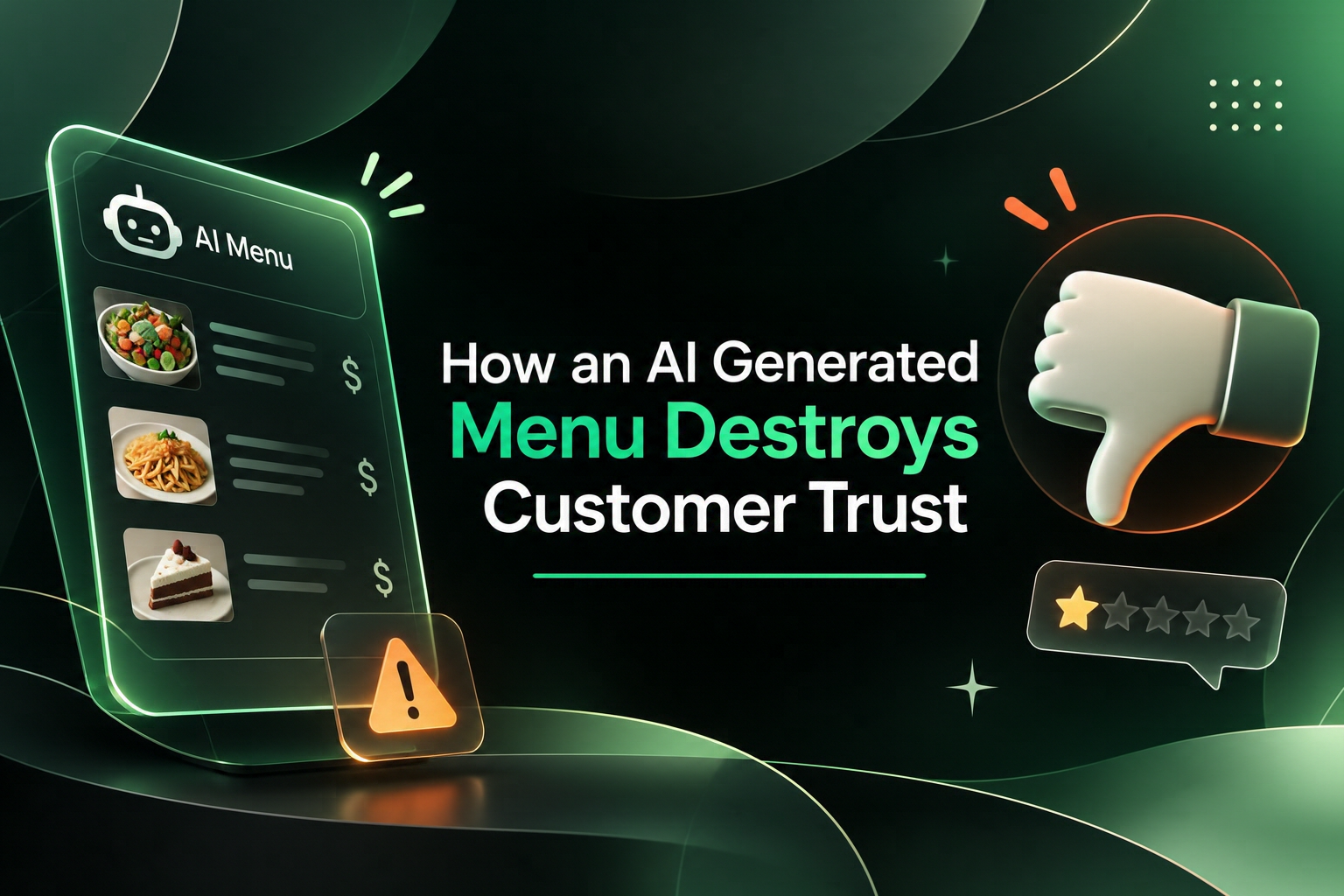
That is the rise of the AI generated menu—and many customers are not impressed.
At first, using AI to create food photos may seem like a smart shortcut. You avoid a photoshoot, save money, and quickly create a polished-looking menu. But food is personal. People do not just look at a menu; they imagine the taste, smell, and experience of eating.
When a customer sees a strange, artificial-looking dish, trust disappears fast. They may wonder whether the restaurant is cutting corners in the kitchen too. In an industry where authenticity matters more than ever, an AI generated menu can quietly destroy the reputation you worked hard to build.
Why an AI-Generated Menu Destroys Customer Trust
A menu is a promise. It tells customers, “This is what you will receive when you order.” If the image looks fake, exaggerated, or physically impossible, that promise feels broken before the customer even visits.
Here is why AI food imagery often backfires:
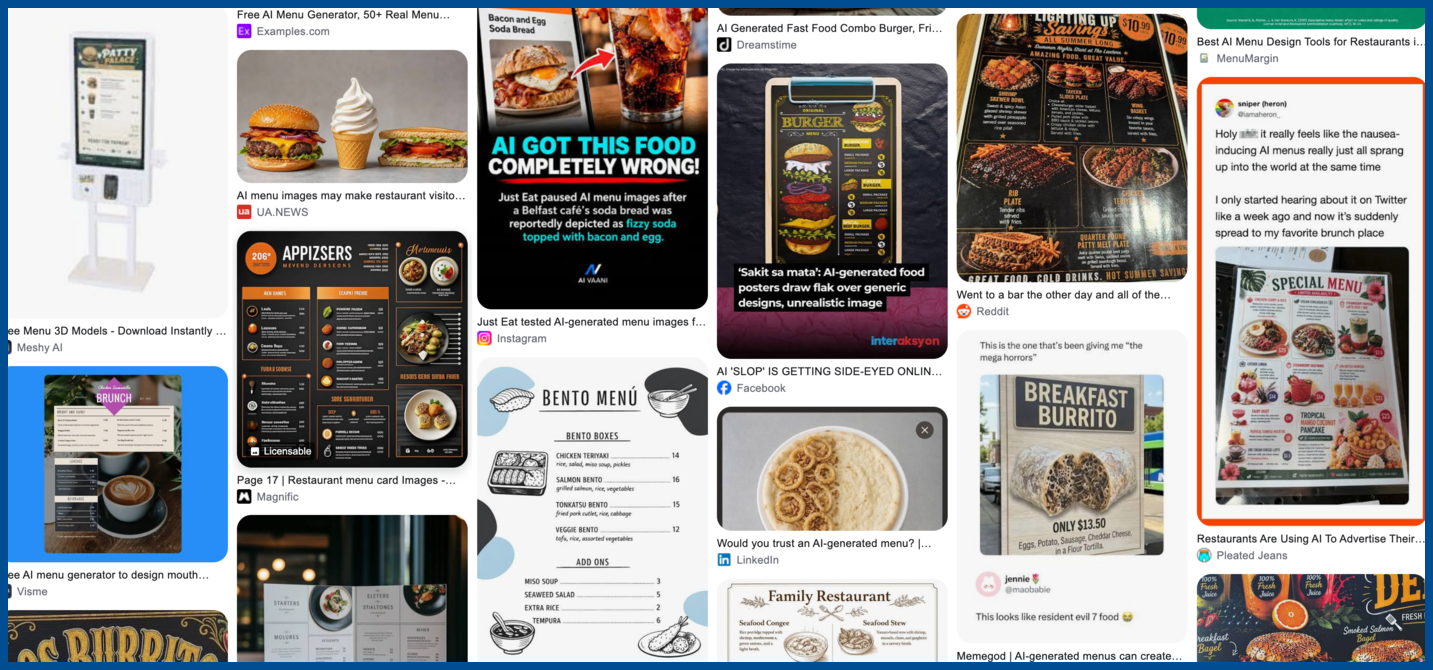
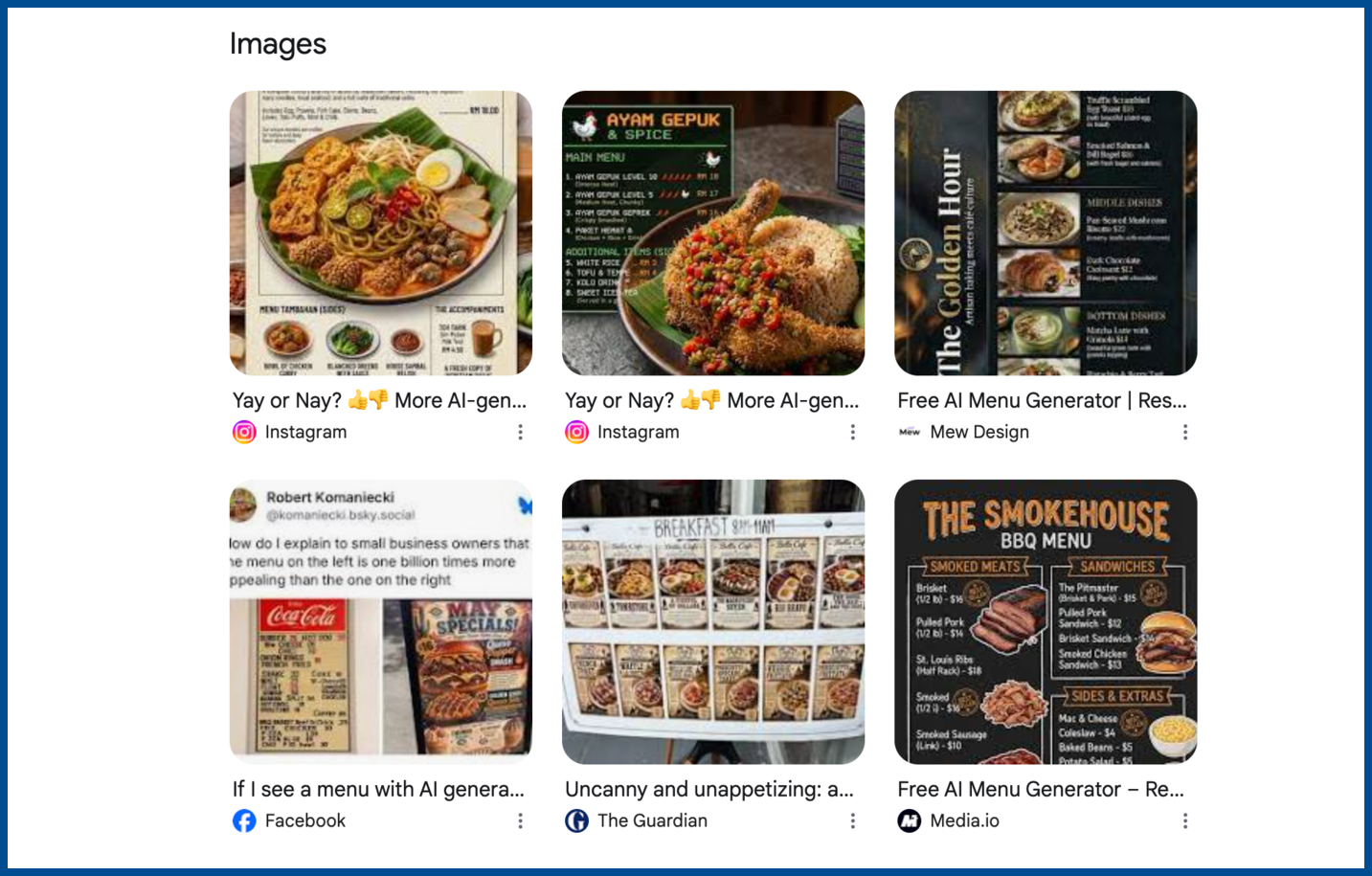
- It looks unnatural. AI can create food with odd textures, warped ingredients, floating seeds, strange shadows, or melted-looking cheese.
- It creates doubt. If the menu photo is not real, customers may assume the ingredients, portion sizes, or preparation are not real either.
- It feels lazy. Customers may think a restaurant chose the cheapest possible shortcut instead of investing in its food and brand.
- It can feel misleading. If the actual dish looks very different from the AI image, diners may feel tricked.
- It invites public criticism. People now recognize “AI slop” quickly and often post it on TikTok, Reddit, X, and Instagram.
This is not just a design issue. It is a trust issue.
The Uncanny Valley of Food
The “uncanny valley” is a term used to describe the uncomfortable feeling people get when something looks almost human—but not quite. AI food images can create a similar reaction.
A burger may have the right shape, but the bun may look porous like a sponge. A sandwich may have ingredients that seem to melt into one another. A plate of pasta may look shiny, rubbery, or strangely geometric.
Your brain notices these small errors immediately. Instead of thinking, “That looks delicious,” it thinks, “Something is wrong with that food.”
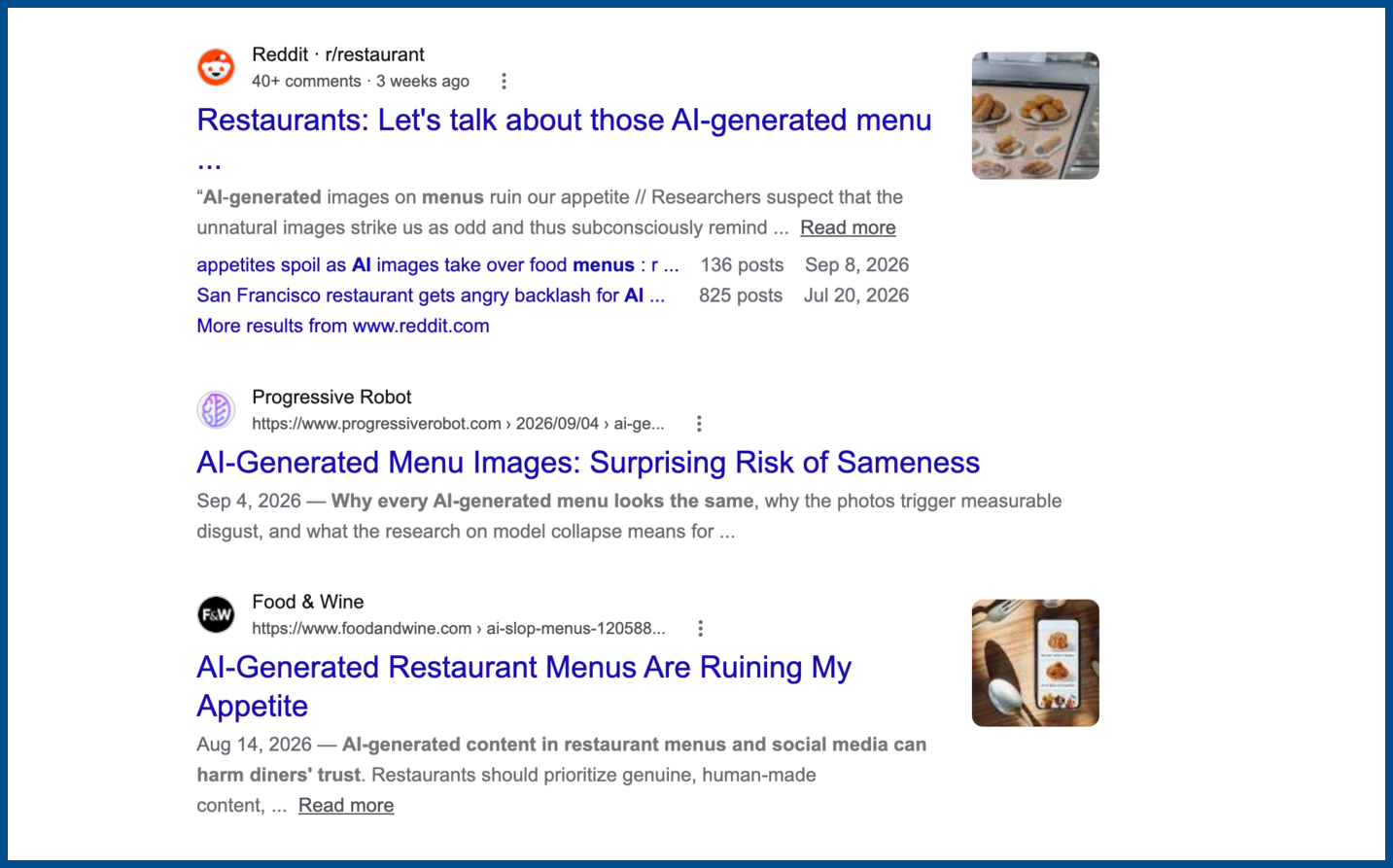
Research supports this reaction. A 2025 peer-reviewed study found that people rated slightly imperfect AI food images as more “uncanny” and less pleasant than either clearly unrealistic images or highly realistic food photos. Another study found that people expressed less desire to eat food shown in AI-generated images, even when they judged its nutritional qualities similarly to real food.
In other words, an AI generated menu does not just look strange. It can actually reduce a customer’s appetite.
Real-World Backlash Is Growing
This is no longer a small design trend. Customers are actively calling out restaurants for using fake food images.
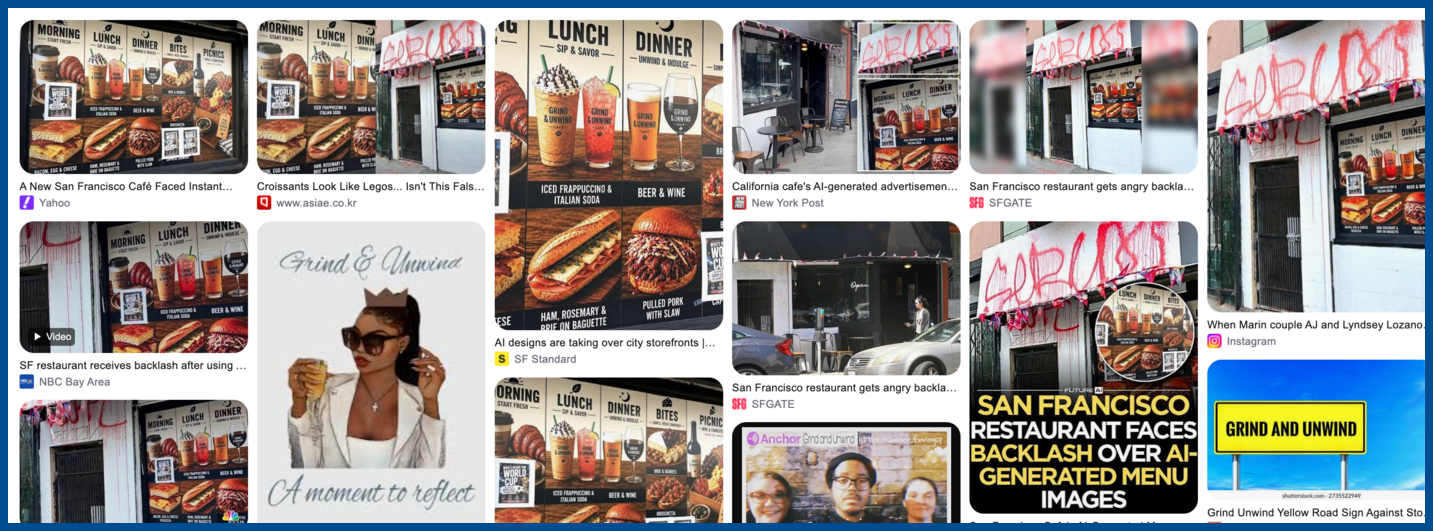
In San Francisco, the café Grind & Unwind faced strong criticism after displaying AI-generated images of sandwiches, coffee, and bread on its windows. Online commenters compared the focaccia to a loofah and described other dishes as unnatural. The backlash became so intense that the business reportedly had to remove the sign and spend hundreds of dollars repainting the wall.
In Los Angeles, a customer named Adaeze Onejeme noticed AI-style food images at several night-market stalls. She described the food as too shiny and rubbery, then chose to buy from vendors using more traditional food advertising instead. She shared her experience on TikTok, helping fuel the wider conversation around “AI slop menus.”
The reaction is global, too. CNN reported examples from Tokyo, Kuala Lumpur, and Berlin, where AI food ads showed bagels that looked like cobwebs, spaghetti that resembled yarn, and quiche with plastic-like textures.
These examples show an important lesson: customers are not simply annoyed by a bad image. They feel that the restaurant does not understand food, quality, or honesty.
What Customers See When They See Fake Food
When someone sees an AI generated menu, they may not consciously think, “This image was made by artificial intelligence.” But their instincts still react.
They may think:
- “Is this dish actually available?”
- “Will my food look anything like this?”
- “Are they hiding something?”
- “If they cut corners on the menu, did they cut corners in the kitchen?”
- “I do not trust this place.”
That last thought is the most dangerous one for a restaurant.
Food is closely connected to safety. People are naturally cautious about anything they eat. When an image looks even slightly wrong, it can trigger a protective response. Psychologist Alexander Diel explained that people may be especially sensitive to food images because food can make them sick, so the brain becomes alert when something appears off.
A customer does not need proof that your kitchen is unsafe. A strange menu image is enough to plant the doubt.
AI Images Versus Human Design
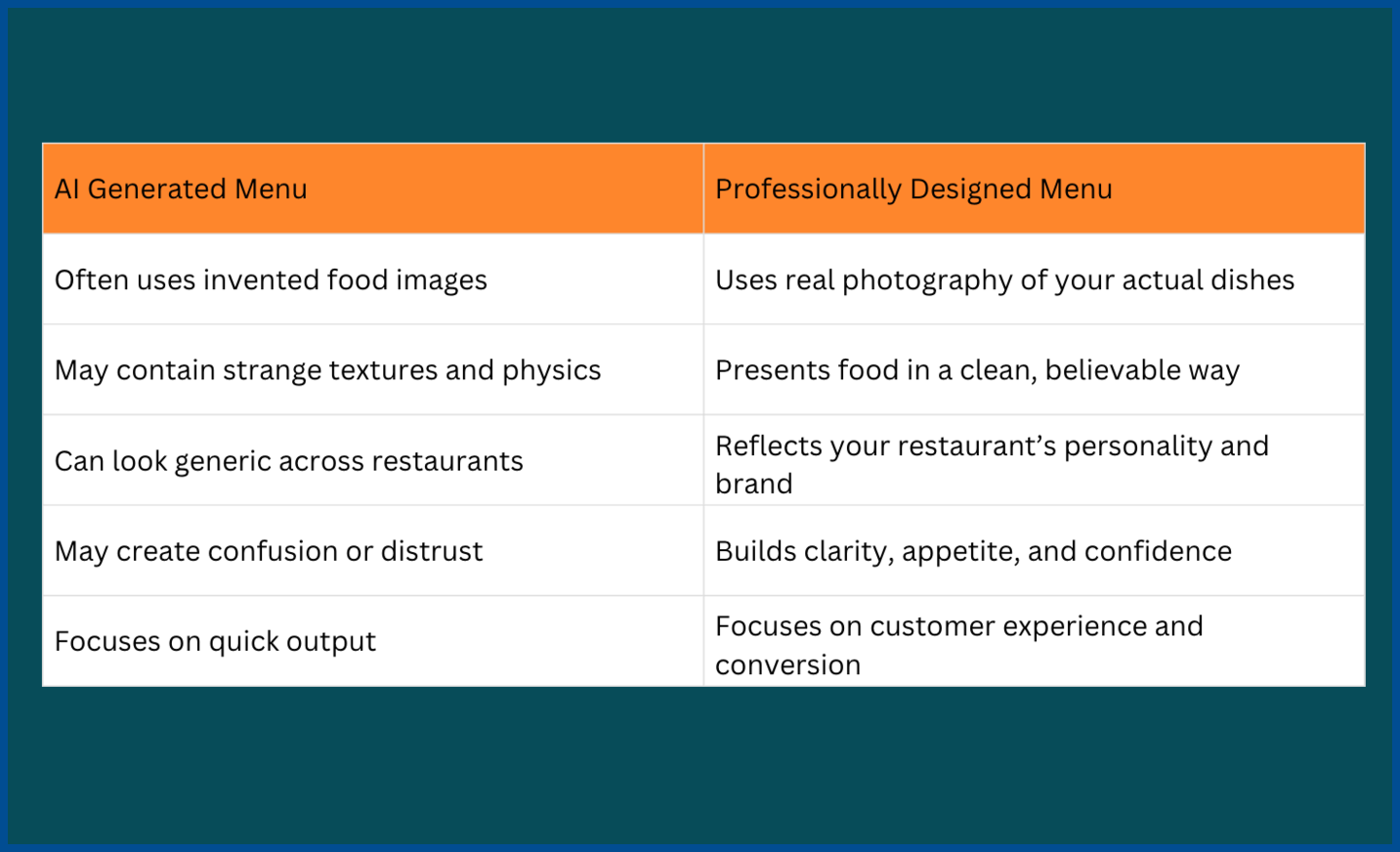
There is a major difference between an AI generated menu and a menu designed by a real professional.
A professional graphic designer does not simply “make food look pretty.” They understand how to guide the eye, create balance, choose readable fonts, use color carefully, and leave enough negative space so the menu feels easy to browse.
For example, a designer can take a real photo of your best-selling burger and place it beside a short, clear description. They can use warm colors to make the dish feel inviting, choose a font that matches your restaurant’s personality, and make sure prices and dish names are easy to read.
The result is not fake perfection. It is real food presented well.
Authenticity Is the New Currency
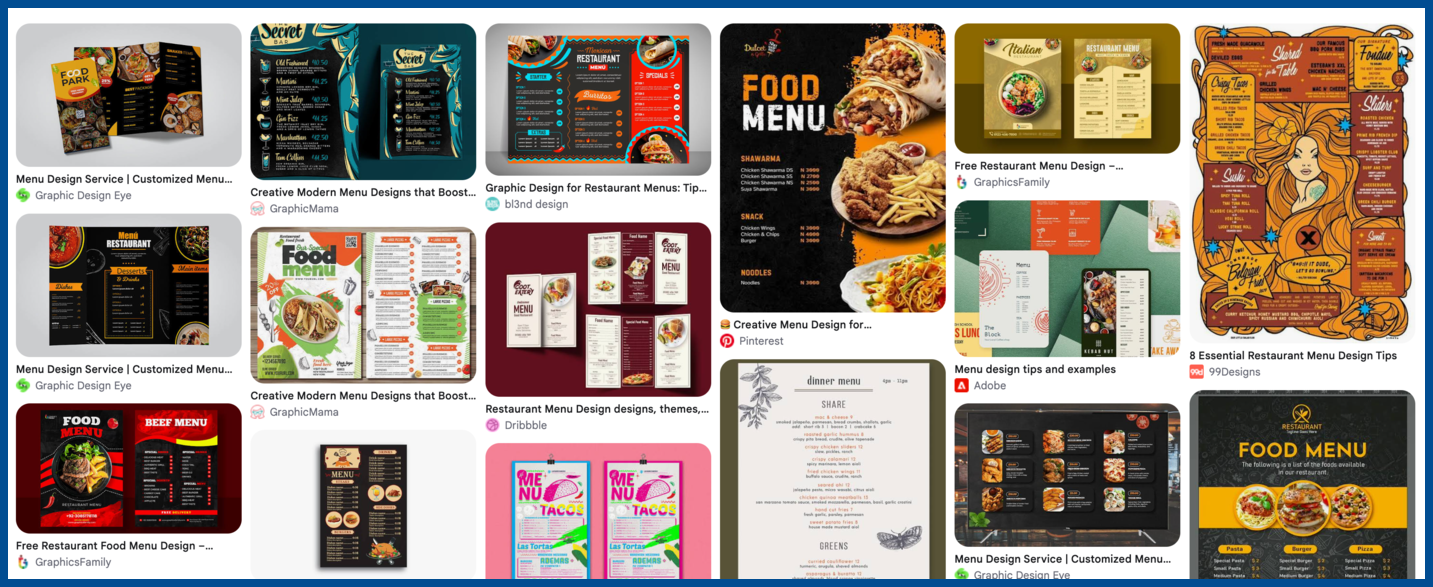
Customers today value honesty. They want to know where food comes from, who made it, and whether the business cares about quality.
That does not mean every restaurant needs a huge photography budget. It means your marketing should reflect reality.
A simple, well-lit photo taken with a smartphone can feel more trustworthy than a glossy AI image. A hand-written specials board can feel more personal than a generic digital design. Real photos of your staff, kitchen, or dining space can make customers feel connected to your business.
Nancy Hopkins, president of the International Association of Culinary Professionals, advised small restaurant owners without large budgets to use smaller illustrations or even smartphone photos rather than AI-generated food images. Her advice was simple: authenticity is what hungry customers are searching for.
Your food does not need to look like a luxury magazine advertisement. It needs to look like your food—appetizing, recognizable, and honest.
Your Menu Is a Marketing Asset
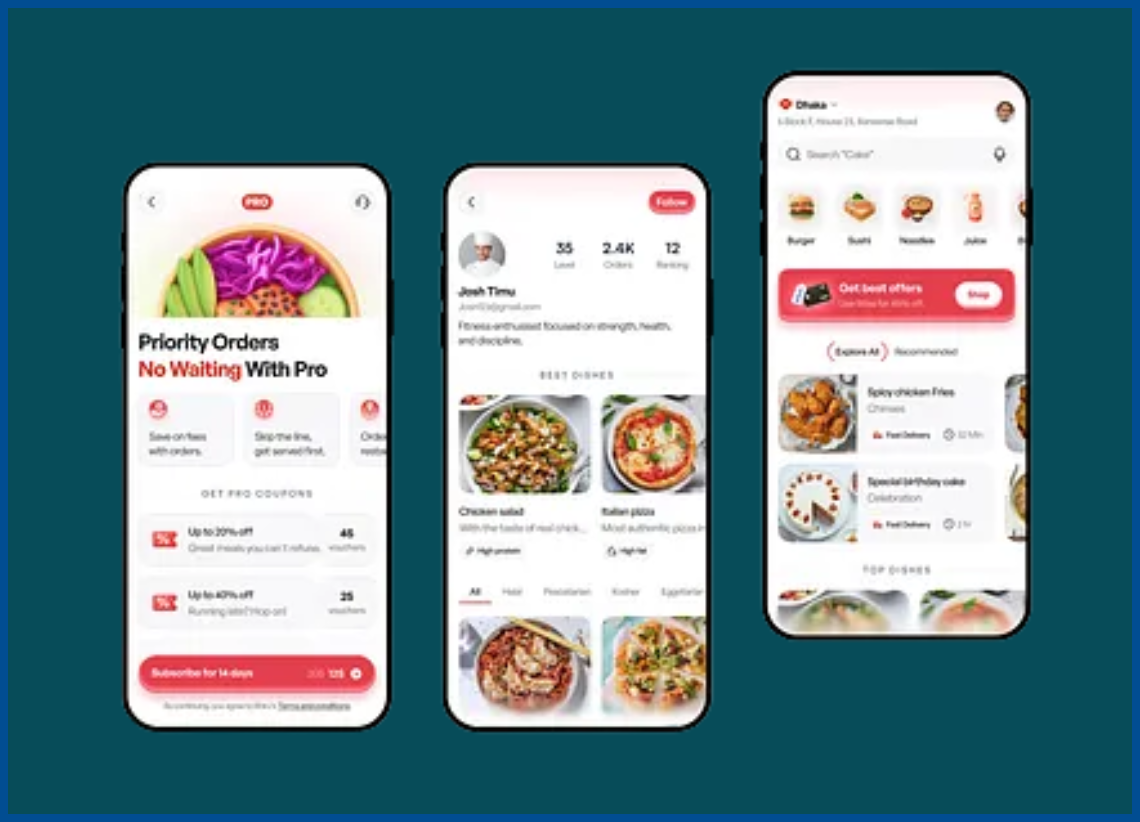
Many restaurant owners treat the menu as an afterthought. They spend time improving recipes, training staff, and managing deliveries, but then use a rushed template or AI image generator for the menu.
That is a mistake.
Your menu appears in more places than you may realize:
- Delivery apps
- Your website
- Social media posts
- Printed menus
- Window signs
- Food delivery platforms
- Online ads
- QR-code menus
Every one of those touchpoints shapes how customers see your brand.
A strong menu does three things:
- Makes dishes easy to understand. Customers should quickly know what they are ordering.
- Makes food look appealing. Good layout and real photography can increase interest without exaggerating the product.
- Makes your brand memorable. Consistent colors, fonts, and visuals help customers recognize your restaurant anywhere.
When your menu looks professional, customers assume the same care goes into your food and service.
How to Build a Menu Customers Trust
If you want to avoid the AI generated menu problem, focus on these practical steps:
- Use real photos whenever possible. Photograph the dishes you actually serve, under natural or well-controlled lighting.
- Do not over-edit images. Brightness, contrast, and cropping can help—but avoid making food look artificial.
- Keep descriptions honest. Say exactly what is in the dish, including key ingredients and portion size.
- Use clear typography. Choose readable fonts and avoid cramming too much text onto one page.
- Create visual hierarchy. Highlight bestsellers, chef specials, or high-margin items without making the menu feel crowded.
- Keep your branding consistent. Use the same colors, fonts, and tone across your menu, social media, and delivery listings.
- Test with real customers. Ask people whether the menu is easy to read and whether the food looks appealing.
A menu should make ordering feel simple. If customers have to squint, decode strange images, or wonder what they are buying, you are losing sales.
The Better Solution: Human Designers
You do not need to choose between an expensive in-house designer and a risky AI shortcut.
Graphically offers unlimited graphic design from real human experts, with delivery in as little as 24 hours and plans starting at $449 per month. The service includes restaurant menus, print design, social media assets, custom illustrations, video and motion graphics, and more.
For restaurants, that means you can get:
- A professionally designed print or digital menu
- Consistent branding across delivery apps and social media
- Menu layouts that highlight your best dishes
- Clean typography and appetizing visual presentation
- Revisions until the design matches your vision
- A dedicated design team that learns your brand over time
Graphically’s Standard plan includes unlimited graphic design requests and revisions, one active project at a time, a dedicated project manager, 24-hour turnaround, and source files in Adobe and Canva formats. The Premium plan supports three projects at once for higher-volume teams.
Instead of risking your reputation on an AI-generated menu, you can work with designers who understand how real food should look, how customers read menus, and how to make your restaurant feel credible.
Conclusion
An AI-generated menu may look like an easy way to save money, but it can cost you something far more valuable: customer trust.
Diners do not want impossible burgers, plastic-looking pasta, or food that resembles something from a science-fiction movie. They want real dishes, honest presentation, and a restaurant that clearly cares about quality.
Your menu is not just a list of prices. It is a first impression, a sales tool, and a promise to every customer who considers ordering from you.
Choose authenticity. Use real food photography, thoughtful design, and a brand presentation that makes people feel confident placing an order. With Graphically, you get access to professional human designers who can turn your actual dishes into menus that look delicious, trustworthy, and uniquely yours.
FAQs
Why do customers dislike AI-generated food photos?
Customers often find them unnatural or unappetizing. Small errors in texture, shape, lighting, and ingredient placement can make food look fake, which creates doubt about the restaurant’s quality.
Yes. If customers do not trust the images or feel confused by the menu, they may choose a competitor instead. Research also suggests people express less desire to eat food shown in AI-generated images.
Is using AI for restaurant marketing always bad?
Not necessarily. AI can help with tasks such as scheduling, payroll, or brainstorming. The bigger risk is using AI to create food images that do not accurately represent the dishes customers will receive.
What should a restaurant use instead of AI food images?
Use real photos of your food, clear descriptions, and professional menu design. If photography is limited, simple illustrations or well-designed text-based menus can still feel authentic.
How can Graphically help my restaurant?
Graphically provides unlimited graphic design from human experts, including restaurant menus, branding, social media assets, and print design. Its plans start at $449 per month, with delivery in as little as 24 hours.
Do I need professional food photography to work with Graphically?
No. You can provide the photos you already have, and a designer can improve the layout, typography, colors, and overall presentation. The key is to use real images that represent your actual food.