Table of Contents
Key Takeaways
- Sensory marketing uses sight, sound, smell, touch, and taste to build an emotional bond with your audience.
- Logic decides the price. Emotion decides loyalty.
- You can’t spray a scent through a screen, so you have to show it with strong visuals.
- Rhode, Gisou, Dove x Crumbl, and Prada sell a feeling first and a product second.
- Great design is what turns a physical sensation into a digital craving.
Let’s be honest about how you scroll.
You don’t stop to read a paragraph about why a lip gloss is hydrating. You stop because a close-up of a cherry dripping in syrup makes your mouth water.
That’s the “show, don’t tell” shift happening in marketing right now. Feature lists are out. Feelings are in.
The strategy behind it is called sensory marketing. In this guide, you’ll learn what it is, why it works, and how top brands use it to make you crave things through a screen.
What Is Sensory Marketing?
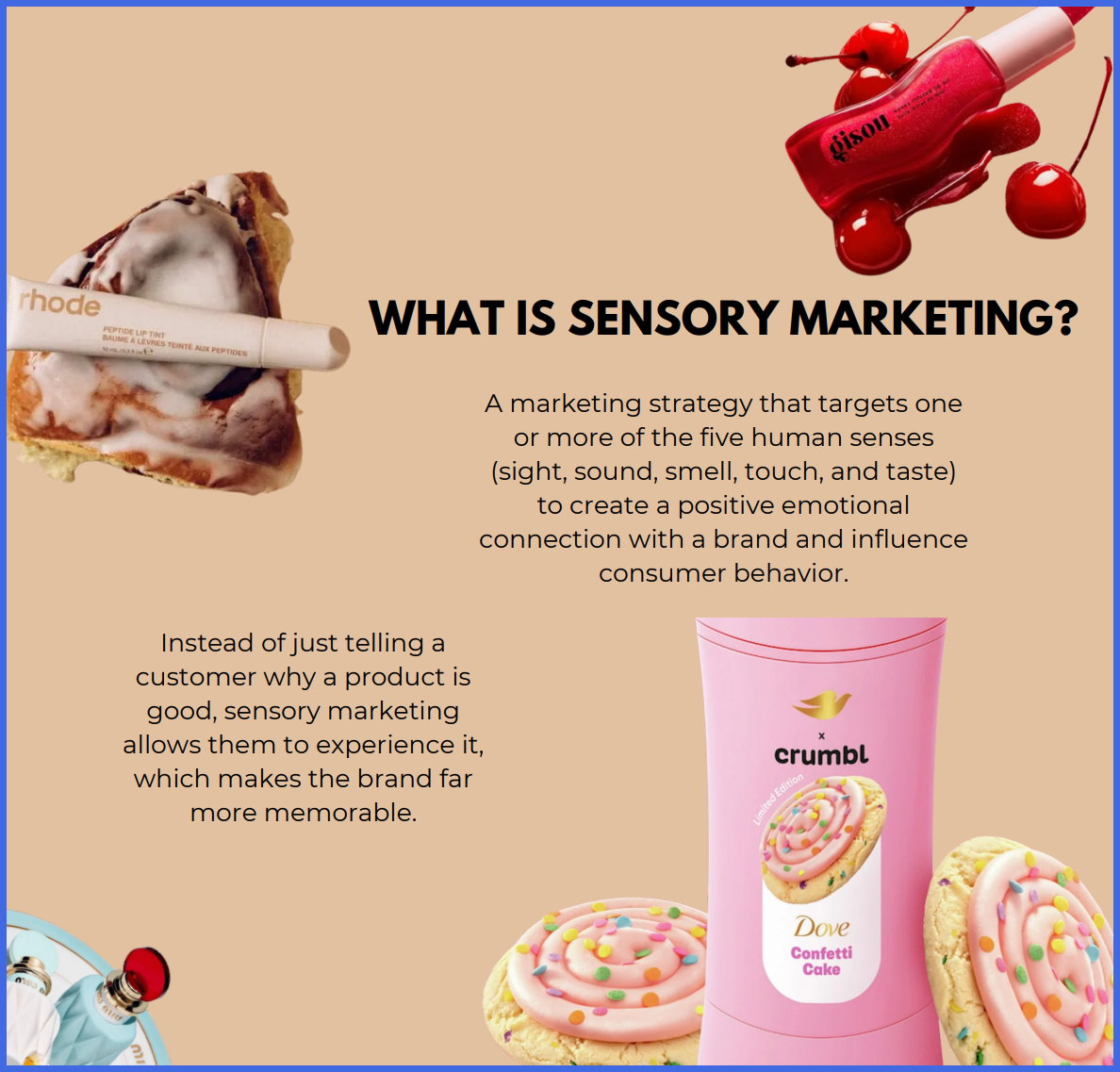
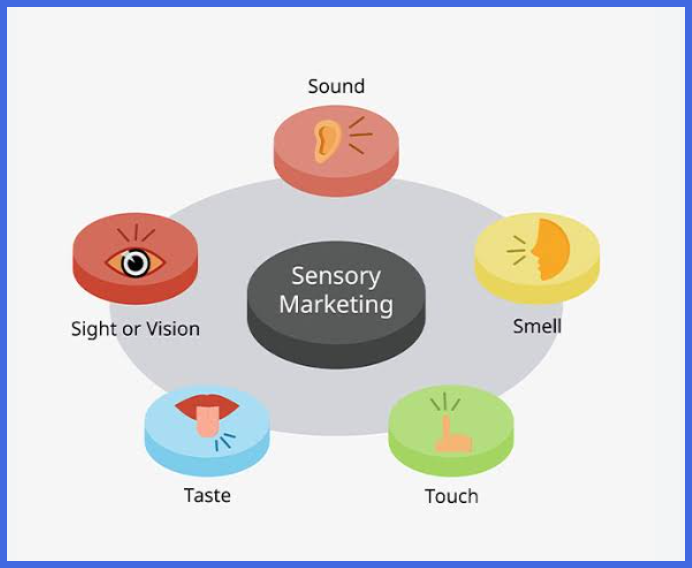
Sensory marketing is a strategy that targets the five human senses to build a positive emotional connection and instantly influence how people shop.
In simple terms, you help people feel your brand, not just read about it.
Here’s how each sense plays a part:
- Sight: Colors, shine, packaging, and close-ups that make a product look irresistible.
- Sound: Jingles, background music, and even the satisfying click of a lid.
- Smell: Scents that bring back memories, like warm cookies or fresh flowers.
- Touch: Texture and weight, like a silky bottle or a glossy, sticky finish.
- Taste: Flavors, plus visuals that make you imagine them.
Stores have used these tricks for years, from pumped-in scents to mood music. But today, a lot of shopping starts on a phone, where nobody can smell or touch anything.
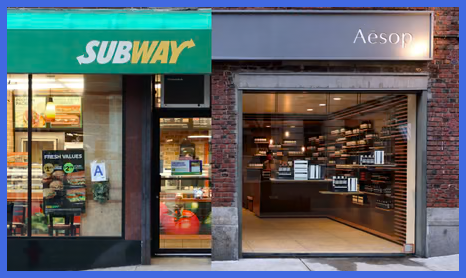
So brands translate physical sensations into visuals that make your brain fill in the rest. That’s why sensory marketing is no longer just a store tactic. It’s a must-have digital strategy.
Why Logic Loses and Emotion Wins
Here’s an easy way to think about it. Logic tells people what they’re willing to pay. Emotion tells them whether they’ll come back.
When a product speaks to several senses at once, people tend to stop comparing and start feeling. And they rarely notice it happening.
Here’s a classic example. Researchers at the University of Leicester played French or German music beside a supermarket wine display.
On French music days, French wine outsold German wine. On German music days, it flipped. Yet most shoppers said the music didn’t affect their choice. The music did the persuading, and nobody noticed.
That quiet pull shows up in real business results too:
- Stronger brand recall. People forget facts and figures faster than they forget how a brand made them feel.
- More time spent looking. In an eye-tracking study of 18,000-plus ads, those that sparked a strong reaction earned 16% more attention.
- Frictionless sales. In the UK’s IPA database of ad case studies, purely emotional campaigns were about twice as likely as rational ones to report very large profit gains (31% vs. 16%).
Viral Campaigns That Make You Crave Through a Screen
Let’s look at four brands that nail this.
Rhode and Gisou: Make People Feel It
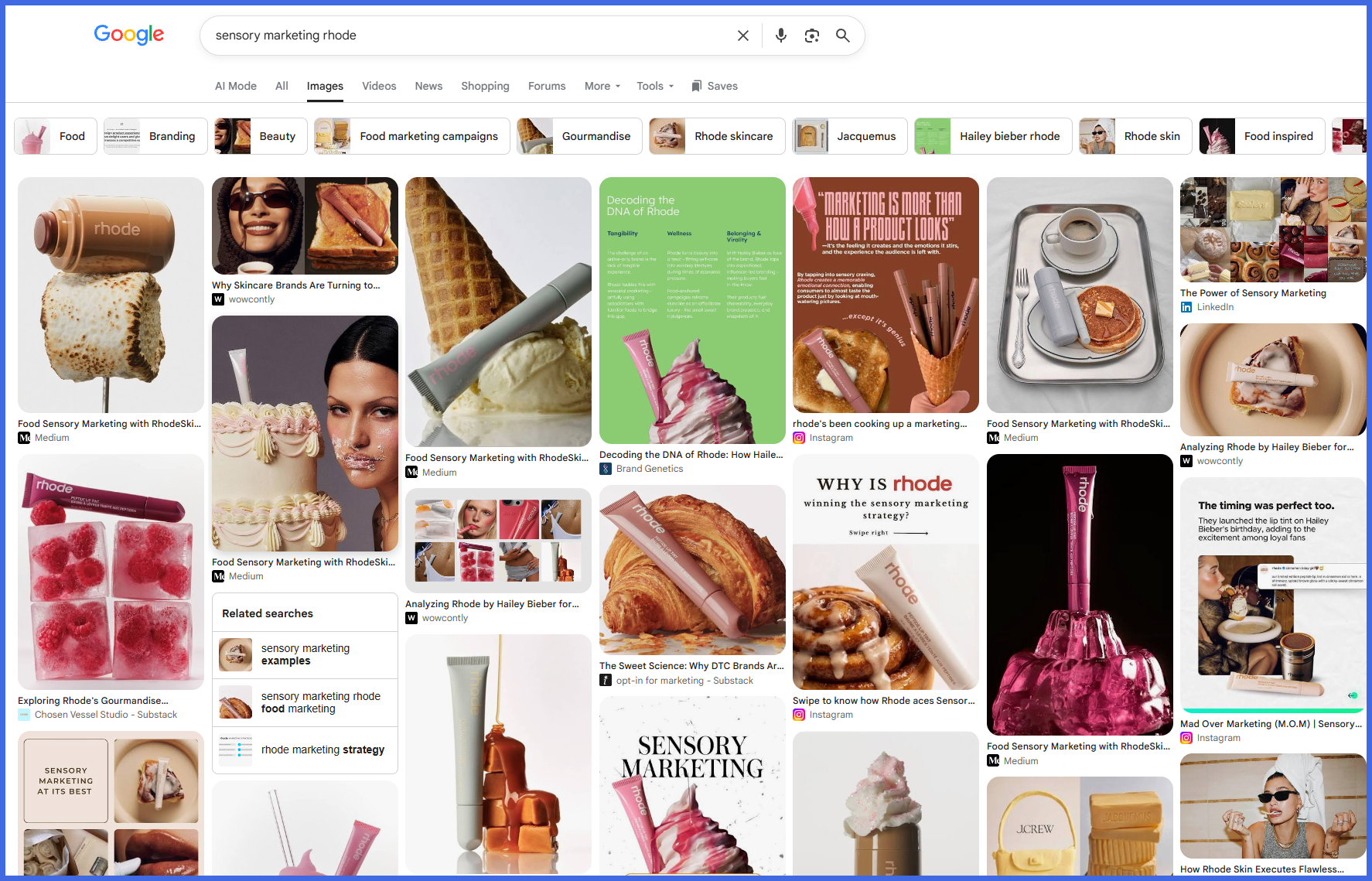
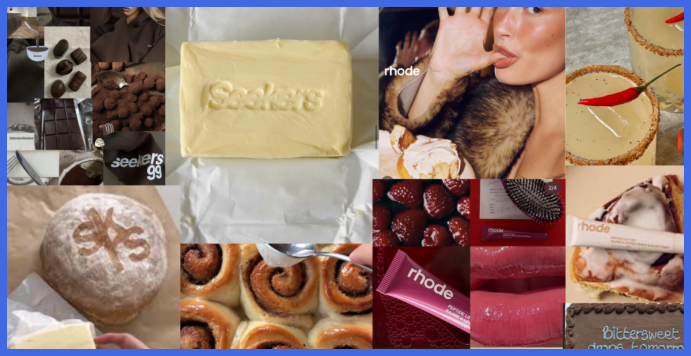
Neither brand just posts a photo of a plastic tube.
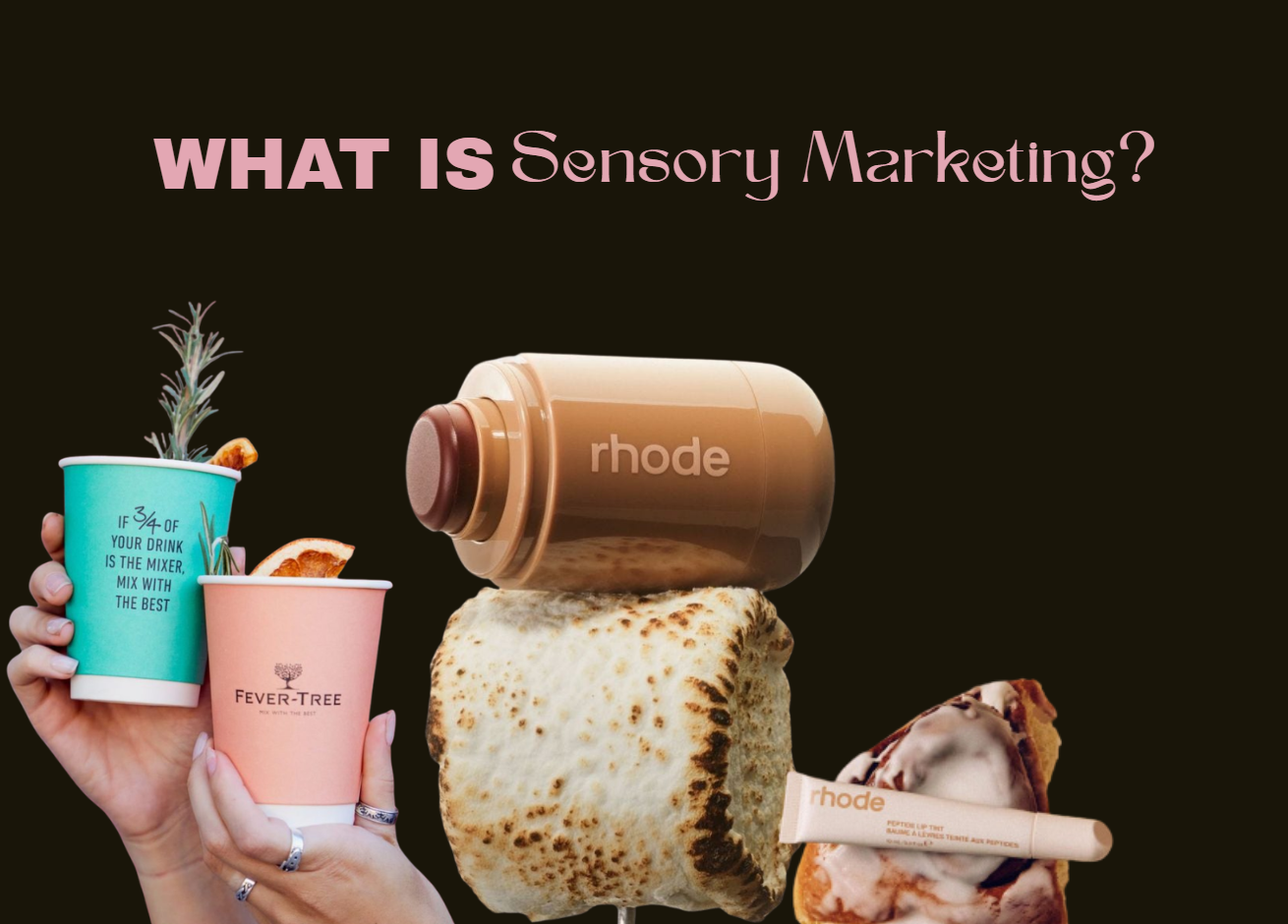
Rhode built its look around one word: “glazed.” Its Peptide Lip Treatment comes in flavors like Salted Caramel and Strawberry Glaze, and its Lip Tint sells a high-shine finish that seems to melt onto your lips.
Your eyes see the shine, and your brain fills in the touch.
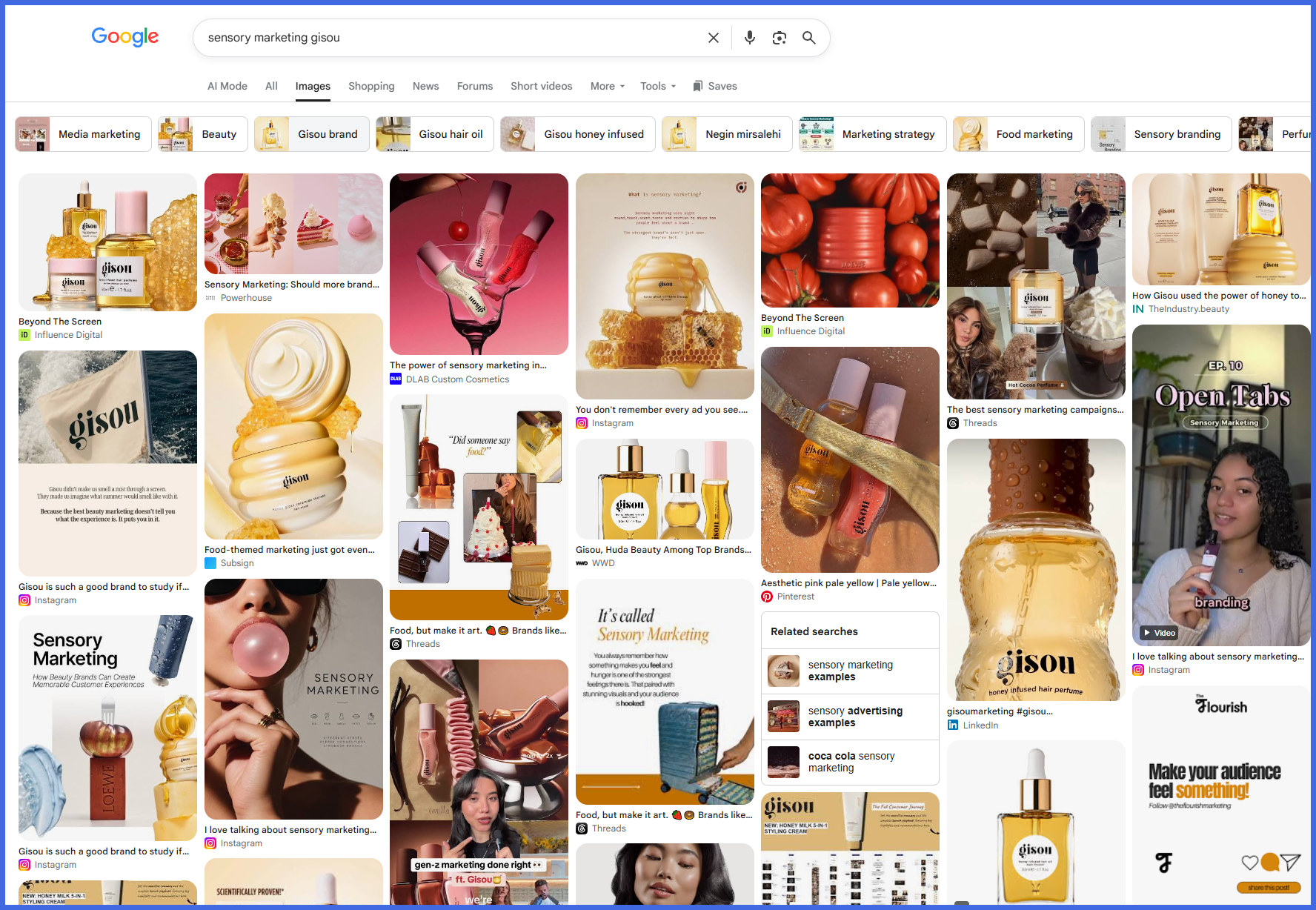
Gisou grew out of the founder’s family beekeeping, and the brand says its Honey Infused Lip Oil copies honey’s golden color, its flow, and its lightly sweet taste.
So when golden honey drips across your screen, you don’t just see it. You almost taste it.
Dove x Crumbl: Make People Smell It
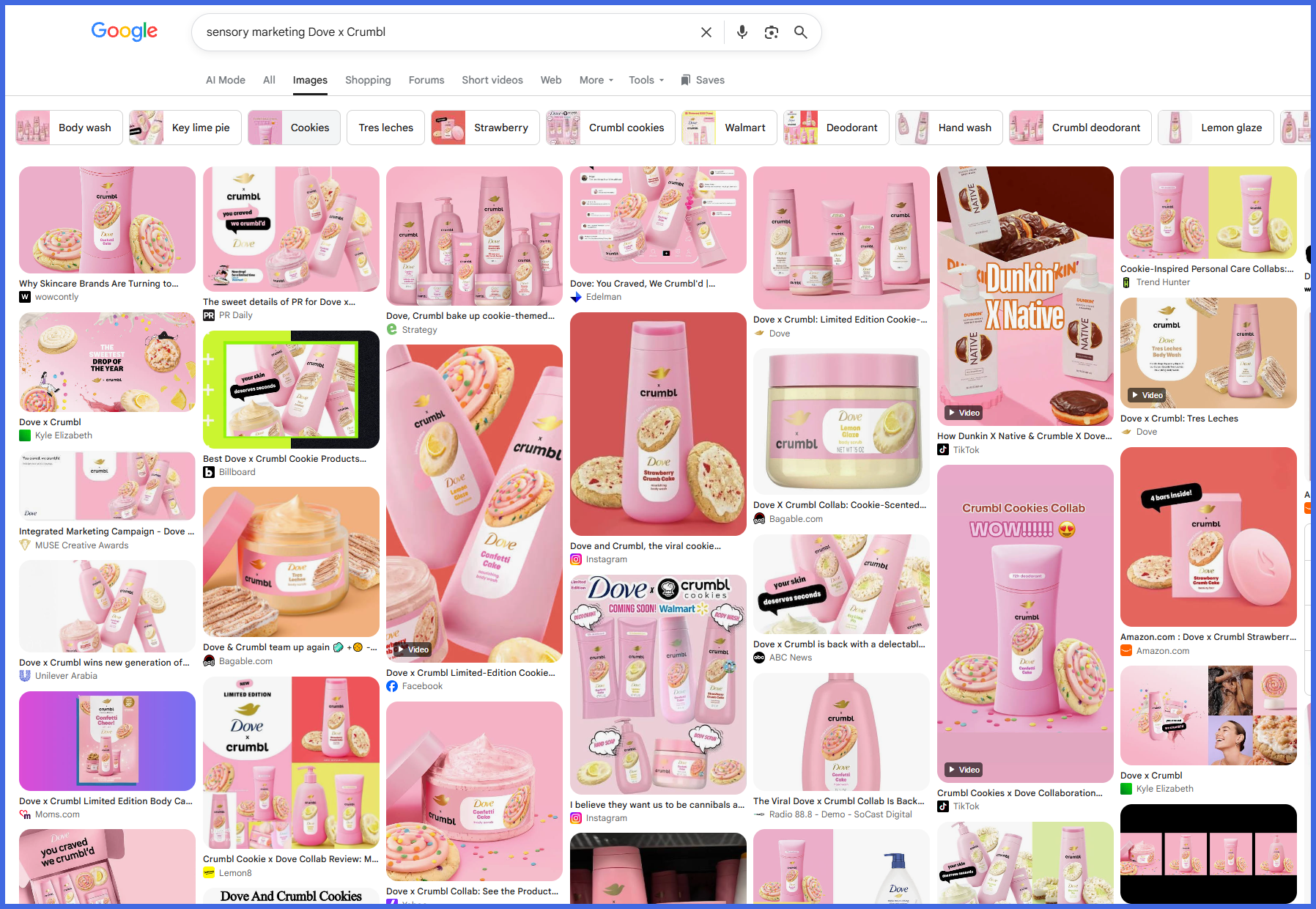
In December 2024, Dove teamed up with Crumbl Cookies on a limited-edition body care line. One scent, Confetti Cake, is meant to smell like a warm sugar cookie with pink frosting.
For the first time, Dove changed its famous white packaging to Crumbl’s signature pink. The labels show a pink-frosted cookie covered in candy confetti.
So before you even open the bottle, you already “smell” cookies. Smell is closely tied to memory, so one look can bring the whole scent flooding back.
Prada: Make People Picture the Scent
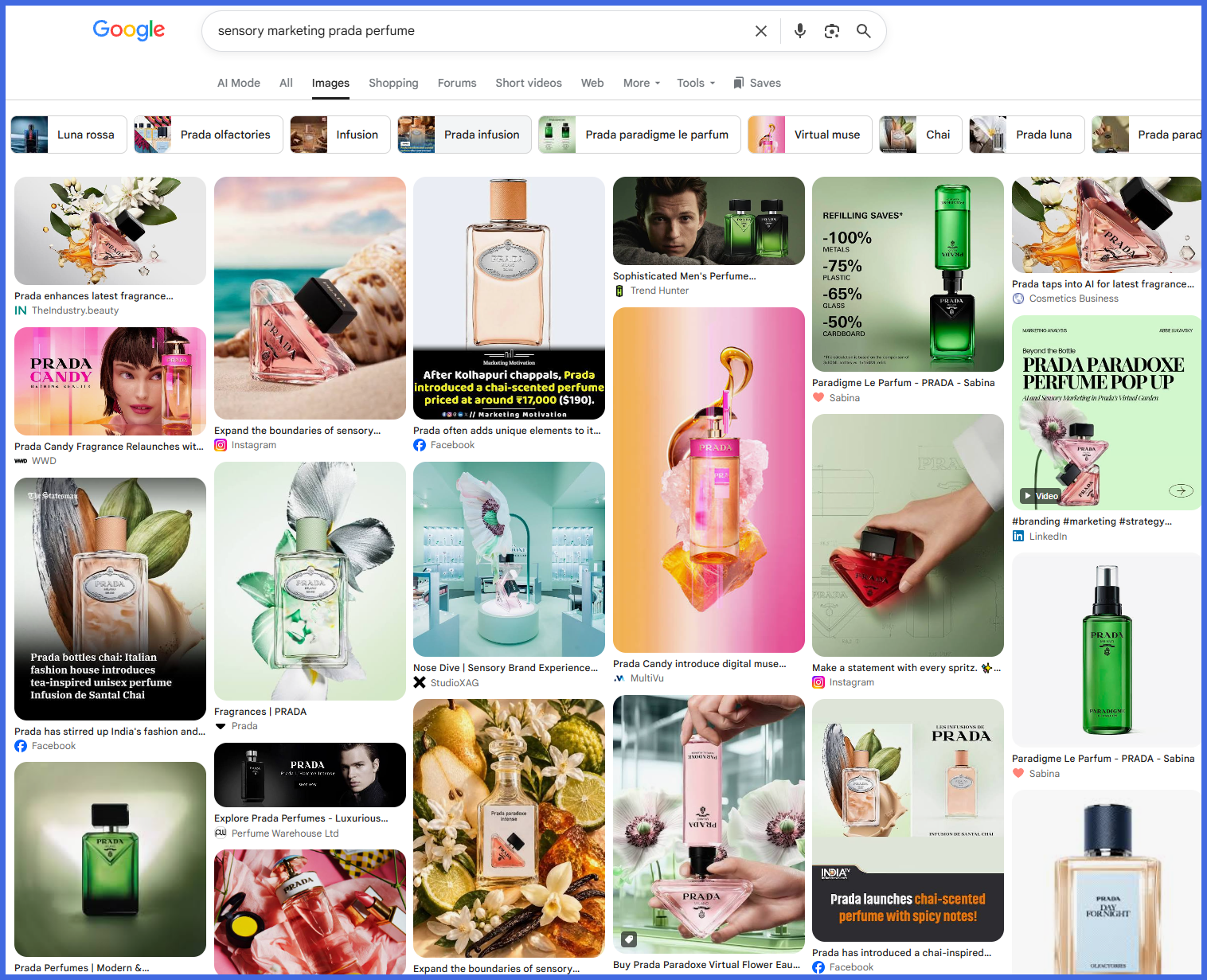
Prada’s Paradoxe perfume is built around a white floral bouquet. Since nobody can sniff a screen, Prada shows the scent instead.
In its 3D billboard ads, a giant bottle pops out of the screen while flowers bloom around it. Its Virtual Flower ad pairs a blooming flower with the perfume’s pink liquid.
Color, petals, and motion do the talking, so you “get” the scent without a single spritz.
How to Use Sensory Marketing in Your Own Content
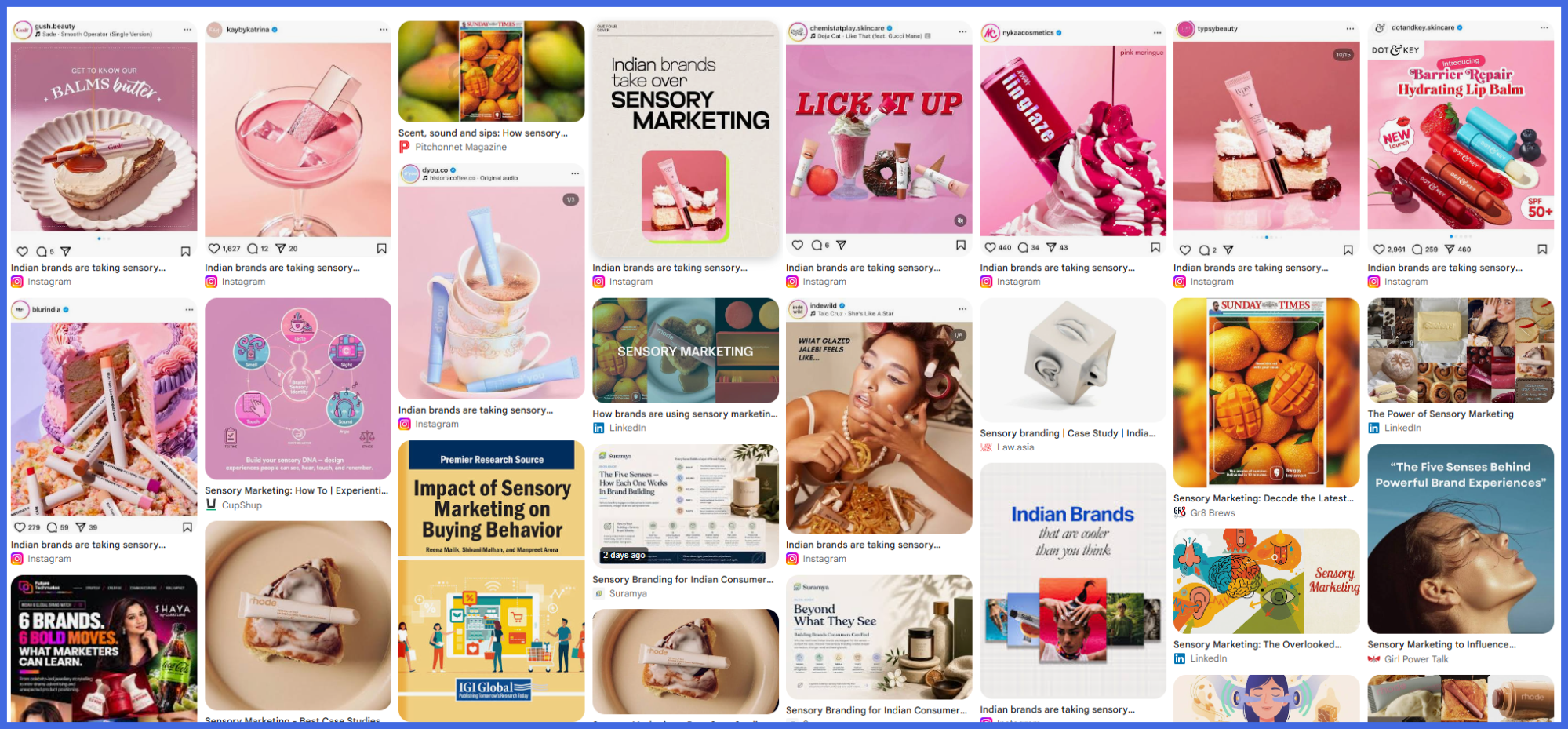
You don’t need a giant budget. Picture how your product would feel, smell, and taste, then show it. Try these six moves:
Zoom in close. Macro shots of a drip, a swirl, or a crumb let people feel the texture.
Add motion. Slow pours, splashes, and melting show the brain how something would feel in your hand.
Use colors people can taste. Pink frosting, golden honey, and cherry red all carry flavor and scent clues.
Pick sensory words. Words like “glazed,” “buttery,” and “juicy” help the picture land.
Don’t forget sound. A soft drip or a crisp click in a short video makes it feel real.
Stay consistent. Repeat the same textures and colors everywhere so people spot your brand in a second.
Conclusion: Don’t Just Sell, Seduce
Why work so hard to pitch your product when your branding can do the heavy lifting? Sensory marketing works because it makes people feel something before they start thinking about price.
But turning touch, taste, and smell into digital graphics takes serious design talent. That’s where Graphically comes in.
Instead of struggling to create glossy, high-texture visuals yourself, lean on Graphically’s unlimited design team to build your “it” factor. You get graphic design, custom illustrations, and video and motion graphics, with most requests delivered within 24 hours.
Their designers know how to craft the glossy, high-impact assets that seduce your audience and make your brand unforgettable.
Ready to make people crave what you sell? Visit Graphically and let your visuals do the selling.
FAQs
What is sensory marketing in simple terms?
It’s marketing that appeals to the five senses so people feel connected to your brand.
Can sensory marketing work online?
Yes. You can’t send a smell through a screen, but you can show textures, colors, and motion that trigger similar feelings.
Which brands use sensory marketing well?
Rhode, Gisou, Dove, and Prada are great examples, along with many food and beauty brands.
Is sensory marketing only for beauty brands?
Not at all. Any brand can use texture, color, sound, and motion to create a feeling, from coffee shops to clothing brands.
How do I get started?
Pick one product and one sense. Show how it feels, then repeat that look across your content.